CA License #1119373Licensed, Bonded & InsuredPowered by Future Generation ConstructionFuture Generation
Napa ADU Builder
Sacramento-built ADUs for the Napa backyard.
A Sacramento design-build crew running the bigger Napa jobs — Alta Heights and Browns Valley infill, the Coombsville and Carneros county lots, and downtown bungalows where the flood map and the West Napa Fault write half the budget.
Trusted by homeowners across Sacramento & surrounding areas.
ADUs in Napa — fast facts
County
Napa County
Region
Bay Area
ADU types we build
Detached, Attached, Garage Conversion, Custom
Contractor license
CSLB #1119373
Free estimate
(916) 677-9774
Last updated
Napa lots aren't Sacramento lots
Old Town bungalows vs. Coombsville acreage
Napa wears two faces. In the city — Old Town, Alta Heights, the streets off Jefferson — you get small old parcels: bungalows and ranchers from the '20s through the '60s on 5,000-to-7,000 sq ft ground, the house close to lines nobody draws that tight now. Cross east into Coombsville or south into Carneros and it flips to half-acre ag-zoned land with room for a backhoe, but well water, a septic field, and a county reading every project through an environmental lens. Over both sits a fortune in dirt and real hazard — the West Napa Fault that snapped in the 2014 South Napa quake, a river that floods, WUI fire up the valley. Our PM sorts which build you've got first.
Free on-site walk before a single dollar is committed
City-of-Napa vs. unincorporated Napa County sorted on the first visit — they build nothing alike
Fault, flood, and WUI status pulled up front, priced honestly, never sprung mid-build
The Napa catch we won't soften
The honest negatives of building in Napa
Here's the honest negative, and Napa stacks a few. Start with the ground: much of the valley floor — downtown, the flats along the Napa River, the low ground south — is soft alluvial, bay-mud-adjacent clay that liquefies in a quake and swells with the seasons, the way 2014 sand-boiled and settled houses on this soil. You don't pour a casual slab and hope; the geotech report comes first and the foundation gets engineered for movement — a stiffened post-tension slab, sometimes piers. Then the patience-testers: the West Napa Fault through Old Town can force an Alquist-Priolo setback, the Napa Creek FEMA flood zone a raised floor and elevation certificate, and an unincorporated lot lands at Napa County PBES — well, septic, oak protection, ag-overlay, and not a fast counter.
Liquefaction-prone river-flat soil read on the first walk — foundation engineered for it, not guessed
West Napa Fault and Alquist-Priolo setbacks flagged on near-trace Old Town lots before any plan is drawn
County PBES timelines and septic/well constraints called honestly — it's a slow, thorough office
Permits, in plain English
The Napa ADU permit process, plainly
Your Napa ADU runs through one of two offices, and the parcel — not the mailing address — decides which. Inside the City of Napa — Alta Heights, Browns Valley, Bel Aire, Old Town — plan check and inspections go through Community Development downtown, at a fair clip. Step into Coombsville, Carneros, the Silverado fringe, or up-valley and you're under Napa County PBES: different fees, slower pace, plus septic, well, and environmental review the city never touches. State law made it ministerial either way. The quiet schedule-setter is water — a City of Napa meter and Napa Sanitation connection, or a county well and septic — so timing runs 8 to 14 weeks in the city, 16 to 24 in the county. We draw the full set in-house and start that coordination the week design begins.
Jurisdiction confirmed first — City of Napa vs. County PBES is parcel-specific, not address-obvious
8–14 week city timeline; 16–24 weeks realistic in the unincorporated county with septic/well review
Complete in-house set: site, structural, Title-24, MEP — corrections answered by the drafter who drew them
Real Napa numbers
What an ADU costs in Napa in 2026
Bay Area pricing runs on its own logic, so put the Sacramento sheet away. In Napa a 612 sq ft one-bedroom detached ADU with mid-grade finishes runs roughly $350K to $480K all-in for 2025 into 2026 on a flat lot; a 960 sq ft two-bedroom lands nearer $510K to $660K. A river-flat liquefaction foundation, a downtown floor raised out of the flood zone, or a Browns Valley hillside can each add $40K to $110K, and septic on a county lot is its own line. Napa labor and hauling materials in over Highway 29 simply runs higher than inland. The rent carries it: a one-bedroom pulls about $2,400 to $3,200 a month here, a two-bedroom $3,000 to $4,000. Every prospect gets a fixed-price proposal after the free walk.
612 sq ft detached one-bed: roughly $350K–$480K all-in on a flat lot (2025–2026)
Napa one-bed ADU rents around $2,400–$3,200/mo; two-bed $3,000–$4,000
Fixed-price contract — itemized scope, financing available if you want it
ADU Services
Pick the ADU that fits your Napa lot
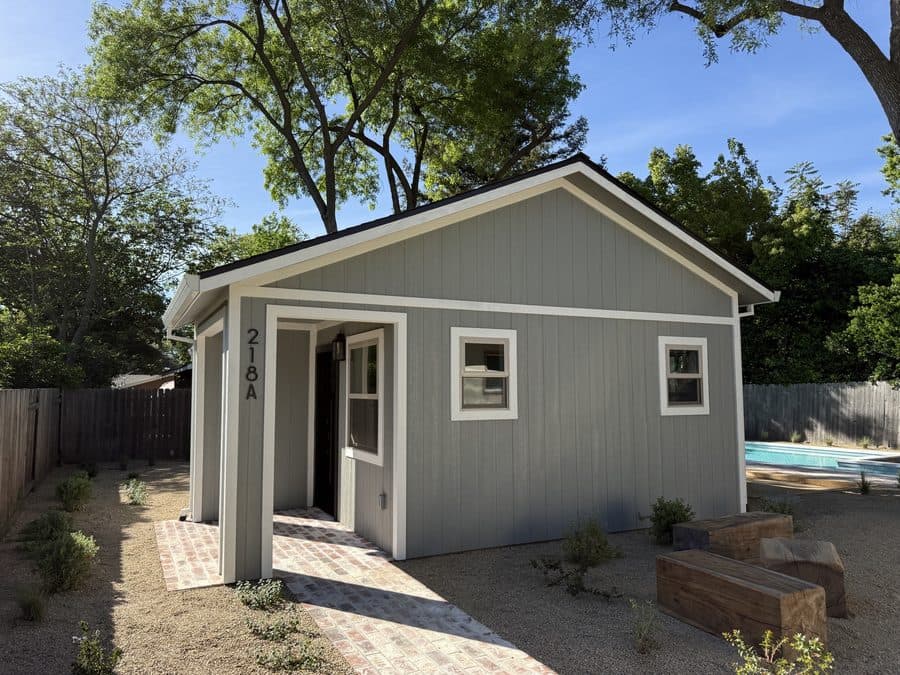
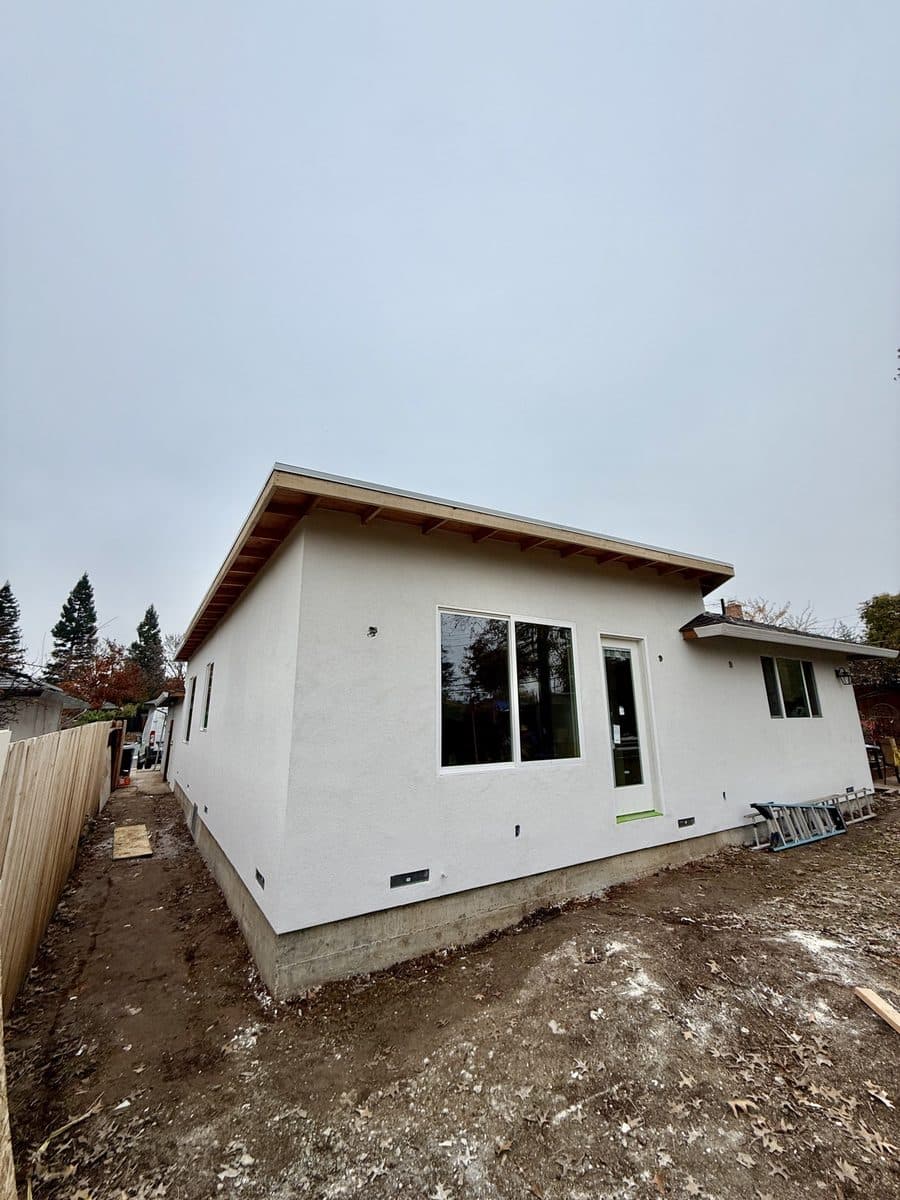
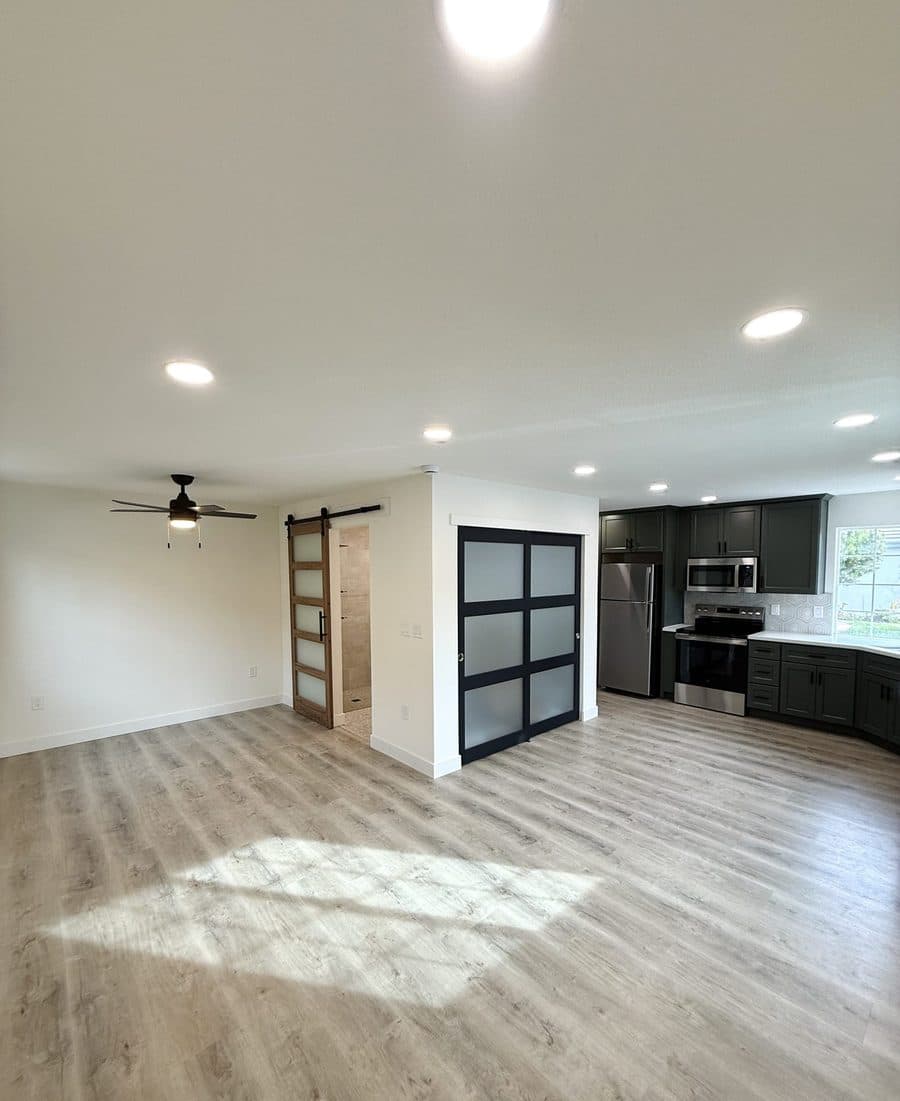
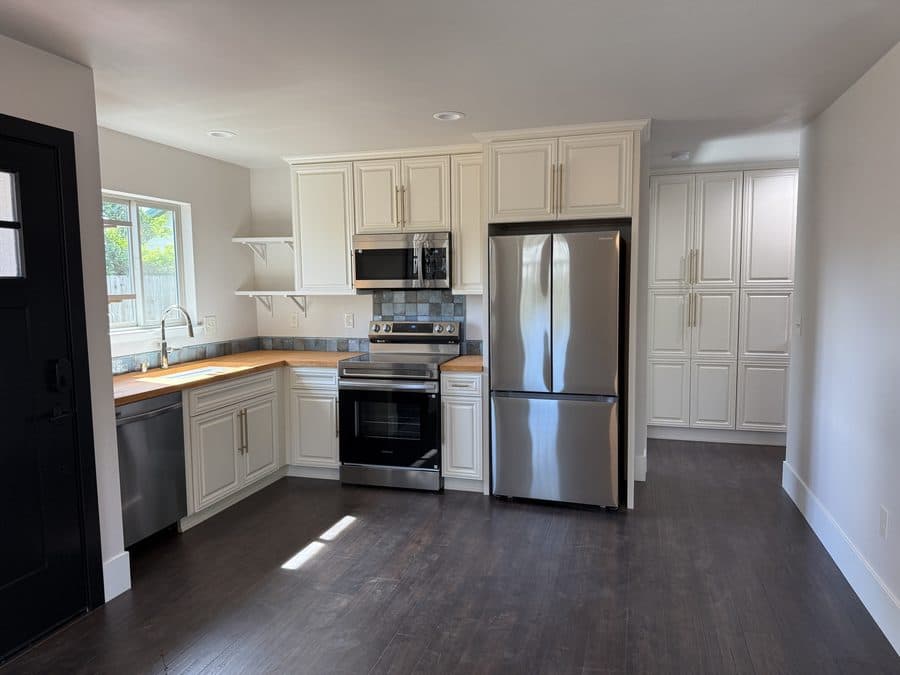
Detached, attached, garage conversion, or fully custom — we design, permit, and build every type of ADU under one roof in the Greater Sacramento Area. Tap a card for the details.
“Every ADU we build is designed to add long-term value and open new possibilities for your property. Let's build something great together.”
— Tim, ADU Specialist
Custom Designs
Built to fit your property & needs
Turnkey Process
We handle permits, plans & everything
Built to Last
Quality craftsmanship that stands the test
Financing Made Simple
$0 Down Options. Build Now, Pay Over Time.
You shouldn't have to drain your savings to build wealth. We partner with trusted ADU lenders to find financing that fits — many homeowners build with little to nothing out of pocket.
Home Equity (HELOC)
Tap your existing equity at competitive rates — the most popular way to fund an ADU.
Renovation Loans
Finance the build against your home's projected after-completion value.
ADU-Specific Financing
Specialized lenders who underwrite based on the rental income your ADU will produce.
Cash-Out Refinance
Roll the project into a new mortgage and keep one simple monthly payment.
Estimate Your Monthly Payment
See what financing your ADU could look like — and how rental income can help cover it.
$180,000Loan amount
Credit Score
Very good · 700–739
Estimated Monthly Payment
$1,320/mo
At 7.99% APR over 30 years (illustrative)
Often offset by $2,000–$3,500/mo in rental income
No prepayment penalties with most partners
Pre-qualification with no impact to your credit
Illustrative only — not a loan offer. Actual rates and terms are set by third-party lenders based on your qualifications.
Service areas
Where we build
Headquartered in the Greater Sacramento Area and serving homeowners from the Sierra foothills down through the Bay Area. Don't see your city? We probably still get there — just ask.
The most common things Sacramento homeowners ask before starting an ADU project.
It depends entirely on your parcel, and it's the first thing we settle. If your lot is inside the incorporated City of Napa — Alta Heights, Browns Valley, Bel Aire, Westwood, Old Town, most of the named neighborhoods — your permit, plan check, and inspections run through the city's Community Development department downtown. If you're out in Coombsville, Carneros, the Silverado fringe, or up-valley, you're in unincorporated territory and go through Napa County Planning, Building & Environmental Services (PBES) instead. The two are very different animals: different fees, different submittal packages, and the county adds septic, well, and environmental review the city doesn't. The county is also noticeably slower. We confirm which one governs your specific address on the first visit rather than guessing from the mailing zip.
It's the reason we read the soil and the fault before anything else. The August 2014 South Napa earthquake was a magnitude 6.0 on the West Napa Fault, and it did real damage downtown and on the west side — cracked masonry, houses shoved off foundations, ground that liquefied and sand-boiled on the river flats. For an ADU, two things follow. First, on the soft alluvial soil near the river and through parts of Old Town, the foundation has to be engineered for liquefaction and seasonal movement, which usually means a geotech report up front and a stiffened or pier foundation. Second, if your lot sits near the West Napa Fault trace, an Alquist-Priolo fault study can require a rupture setback where habitable space isn't allowed. Neither is a dealbreaker — they're just design inputs we pull on the first walk so the unit gets built to the ground it's actually sitting on.
It can, so we check the FEMA panel for your parcel early. Downtown Napa, the Napa Creek corridor, and a lot of the low ground along the Napa River sit in mapped flood zones — the city spent two decades on the Napa River Flood Project precisely because this ground floods. If your buildable area falls inside a flood zone, the ADU may need a raised finished floor above base flood elevation, an elevation certificate, and sometimes flood venting or specific foundation detailing. That's not a no — plenty of flats get a perfectly good unit — but it changes the foundation, adds a survey step, and has to be in the number from the start instead of discovered at plan check. We flag flood-zone parcels on the first visit and set the floor height to the requirement.
Because the wine country is a different cost world, and the hazards pile on. Labor rates, material delivery in over Highway 29 and the 12, liquefaction-prone river soil, West Napa Fault setbacks, downtown flood-zone raised floors, WUI fire detailing up the valley, septic on county lots, and city or county fees all run higher in Napa than in the Sacramento region. A flat-lot 612 sq ft one-bed that might land in the low $200Ks inland runs roughly $350K to $480K all-in here. The offset is the rent and the land: Napa one-beds rent for $2,400 to $3,200 a month and even a modest lot is worth a fortune, so the investment still pencils at wine-country build prices. We quote off real local costs on the first visit — never off an inland price sheet that would set the wrong expectation.
On a friendly flat lot, budget about $350K to $480K all-in for a 612 sq ft one-bedroom detached ADU with mid-grade finishes, and roughly $510K to $660K for a 960 sq ft two-bedroom with upgraded finishes. The biggest cost drivers after size are the foundation — liquefaction soil near the river, a downtown flood-zone raised floor, a fault setback, or a Browns Valley hillside can each add real money — then any WUI fire detailing if you're up the valley, septic if you're on a county lot, an electrical panel upgrade, the City of Napa water meter and Napa Sanitation connection, and how tight your side-yard access is. A river-flat or flood-zone lot can run $40K to $110K over a clean flat-lot slab once the foundation and elevation stack up. You get a fixed-price proposal after the free walk, so the final number is locked before you sign.
Often yes, and these are some of our favorite Napa projects because the lots actually have room — but they build differently from a city parcel. Coombsville and Carneros are unincorporated, so you're under Napa County PBES, not the city, and that means well water, a septic system the new unit has to tie into or expand, oak-tree protection, ag-overlay zoning, and the county's environmental review. The county is thorough and slow; we plan for 16 to 24 weeks to permit out there, not the city's 8 to 14. The upside is space: half-acre and larger lots let you site a real detached unit without threading equipment around the house. We read the septic capacity, the well, the zoning overlay, and the access on the first walk so the project is scoped for the county's process from day one.
It might be, especially up-valley and on the hill edges, so we pull your parcel's fire-hazard status early. Napa County took serious fire in the 2017 Atlas Fire and again in the 2020 Glass and LNU fires, and large parts of the county — the hillsides above town, the up-valley areas, the wildland edges — are mapped into the wildland-urban interface. If your lot is in that zone, a new ADU has to be built to Chapter 7A: ember-resistant vents, fire-rated siding and eaves, specified glazing, non-combustible detailing near the structure. That adds real cost, commonly $15K to $40K depending on the unit, and it's not optional. Flat in-town lots in Old Town or Browns Valley flats often aren't in the WUI; hillside and county lots frequently are. We check it on the first visit and put the detailing in the proposal so it never shows up mid-build.
Usually yes in the county, sometimes tight in town — and it's the first thing we verify, because the rule and the physical yard are two different questions. State law lets you build a detached ADU up to 800 sq ft (often larger) with reduced 4-foot side and rear setbacks, which is what makes older in-town Napa lots work at all. The real constraint in the city is rarely the code — it's whether a 5,000-to-7,000 sq ft lot has usable flat space left after the house, whether the side gate is wide enough to get a crew and concrete to the back, and whether a fault setback or flood line eats into the buildable area. Out in Coombsville or Carneros, space isn't the issue; septic and well siting are. We tape your real setbacks, measure the access, and check the hazard maps on the first walk.
It can if you're in or near Old Town or one of the city's historic and conservation areas, so we check the overlay before we design. Napa protects its older downtown fabric — the bungalows and Victorians around Old Town, Fuller Park, and the Calistoga Avenue stretch — and a project in a historic district can draw extra design scrutiny on how the unit reads from the street, its scale, materials, and roof form. A code-compliant ADU is still ministerial and skips the discretionary hearing, but in these neighborhoods we draw to the district's expectations from the first sketch rather than eating corrections at the counter. If your lot is in a flagged area, we factor the design-review path into the timeline up front so it doesn't surprise you.
Yes, deliberately and for the right projects. We're a Sacramento design-build outfit, CA license #1119373, and Napa is roughly a 65-to-75-mile, hour-and-a-half run for us — west on I-80, then up through American Canyon on Highway 29 or over Highway 12. We don't pretend it's around the corner. It's a real drive, which is why we take the larger Napa ADU jobs where homeowners want Sacramento-area craftsmanship and pricing discipline on a build worth the travel — a detached unit, a serious garage conversion, a Coombsville or Carneros county project with room to work. Those justify the trip and get a committed crew, not a contractor who vanishes for two weeks. Call (916) 677-9774 and we'll talk through whether your project is the right fit for the drive.
Special Offer · Get Up To$5,000 OFFYour New ADU Build!
Build Your ADU for Less
Save up to $5,000 on your detached, attached, or garage-conversion ADU. Permits and design included.
We treat every home like it's our own — quality work, clear communication, and happy homeowners.
PaulOwner · Future Generation
7 min read1,529 words8 sections
Building an ADU in Napa: what a Sacramento contractor learned working a town with a fault under it and a river through it
Napa is two jobs wearing one name. In the city you get tiny old bungalow lots, a fault that knocked downtown around in 2014, and a river that floods the flats. Out in the county you get acreage with a septic field, a well, and one of the slowest building offices in the Bay Area. A backyard unit here is a six-figure footprint on ground worth more than the house. We're a Sacramento crew that takes the Napa jobs worth the drive. Here's the honest version.
01Section
Why the Napa backyard got valuable
Napa is the working seat of the wine country — where the people who pour, cook, farm, and nurse actually live while resort prices climb up the valley around them. The city did most of its growing in the bungalow-and-ranch decades, filling the flat ground between the river and the western hills. The desirable in-town neighborhoods are now old and built out, boxed in by an aggressive urban-limit line, ag land, and the slopes. Ground that can't spread out gains value instead, and Napa's gained a lot.
That pressure is the whole reason an ADU makes sense here, even at Bay Area build costs. When a modest Alta Heights or Browns Valley house clears well past a million and a one-bedroom rents for what a mortgage runs in most of the country, the unused 600 square feet behind the house becomes the most valuable thing on the parcel. The hospitality and winery economy holds a hard floor under rental demand, and state law forced city and county to approve a compliant unit ministerially. Demand was never Napa's question. The fault, the flood map, the soil, and a slow county counter were.