CA License #1119373Licensed, Bonded & InsuredPowered by Future Generation ConstructionFuture Generation
Napa · Attached ADU
A second unit that shares a wall, built onto your Napa home the right way.
An attached ADU borrows a wall and a short utility run from your existing house, so it lands cheaper and faster than a freestanding build. I bring a Sacramento design-build crew about an hour over the hill to do it.
Trusted by homeowners across Sacramento & surrounding areas.
Attached ADU in Napa — fast facts
City
Napa
ADU type
Attached ADU
Contractor license
CSLB #1119373
Free estimate
(916) 677-9774
Last updated
Why attached
One shared wall does a lot of work
An attached ADU leans on the house you already have. It shares one wall, ties into your existing roof line, and the plumbing and electrical only have to travel a few feet instead of across the yard. That's where the savings live. On a Napa lot, that matters more than people expect, because the valley floor and the downtown blocks around Alta Heights and Browns Valley aren't huge, and a detached unit eats setbacks fast. Attached keeps the new square footage tight against the structure. The honest trade-off is that you're locked to where your house sits and where that shared wall lands. You don't get to pick the prettiest corner of the yard. You build off the bones that are already there.
Shorter water, sewer, and electrical runs cut cost
No second foundation footprint to grade and pour
Existing roof and siding give the addition a head start
The tie-in
Where two structures become one
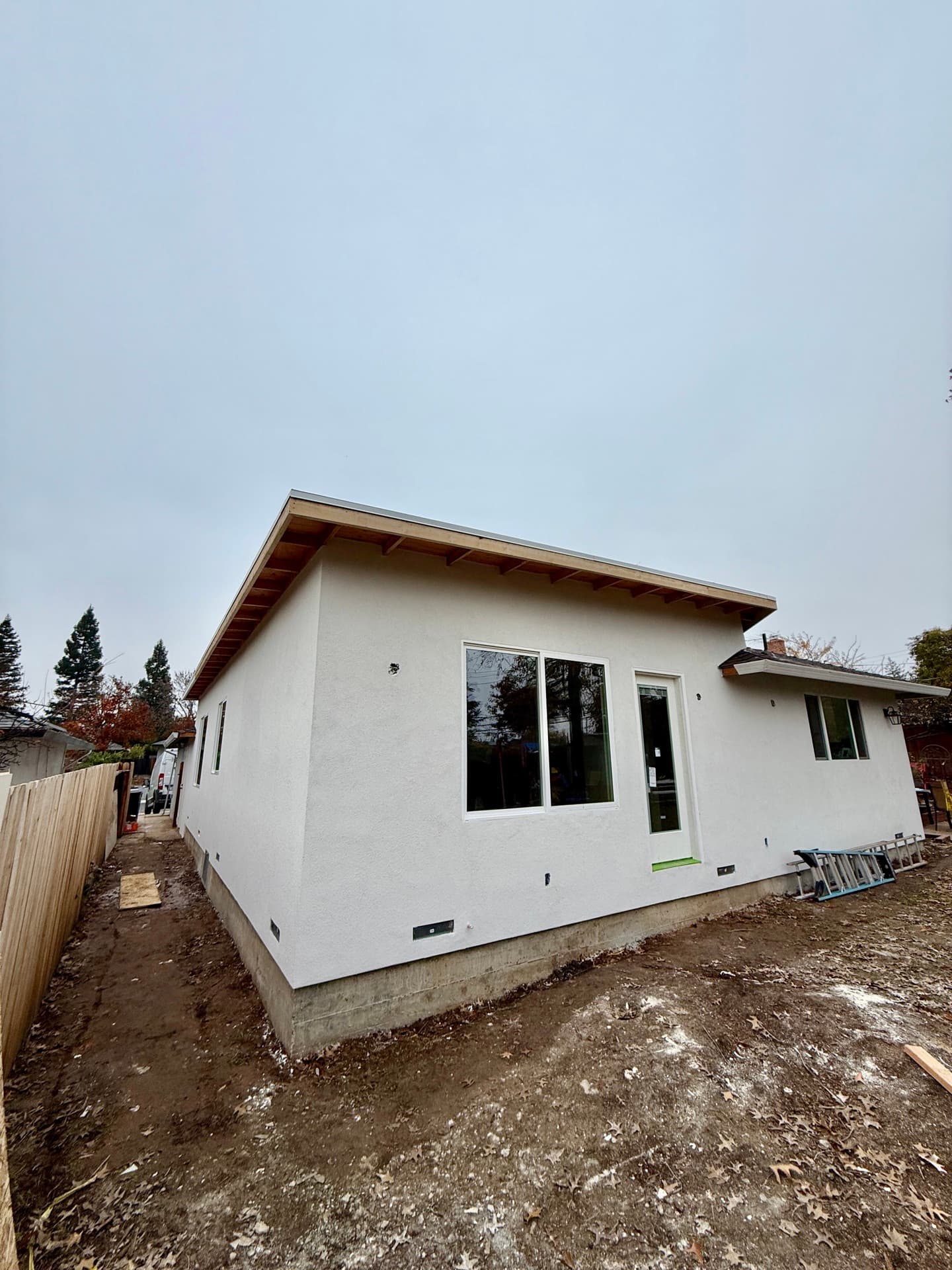
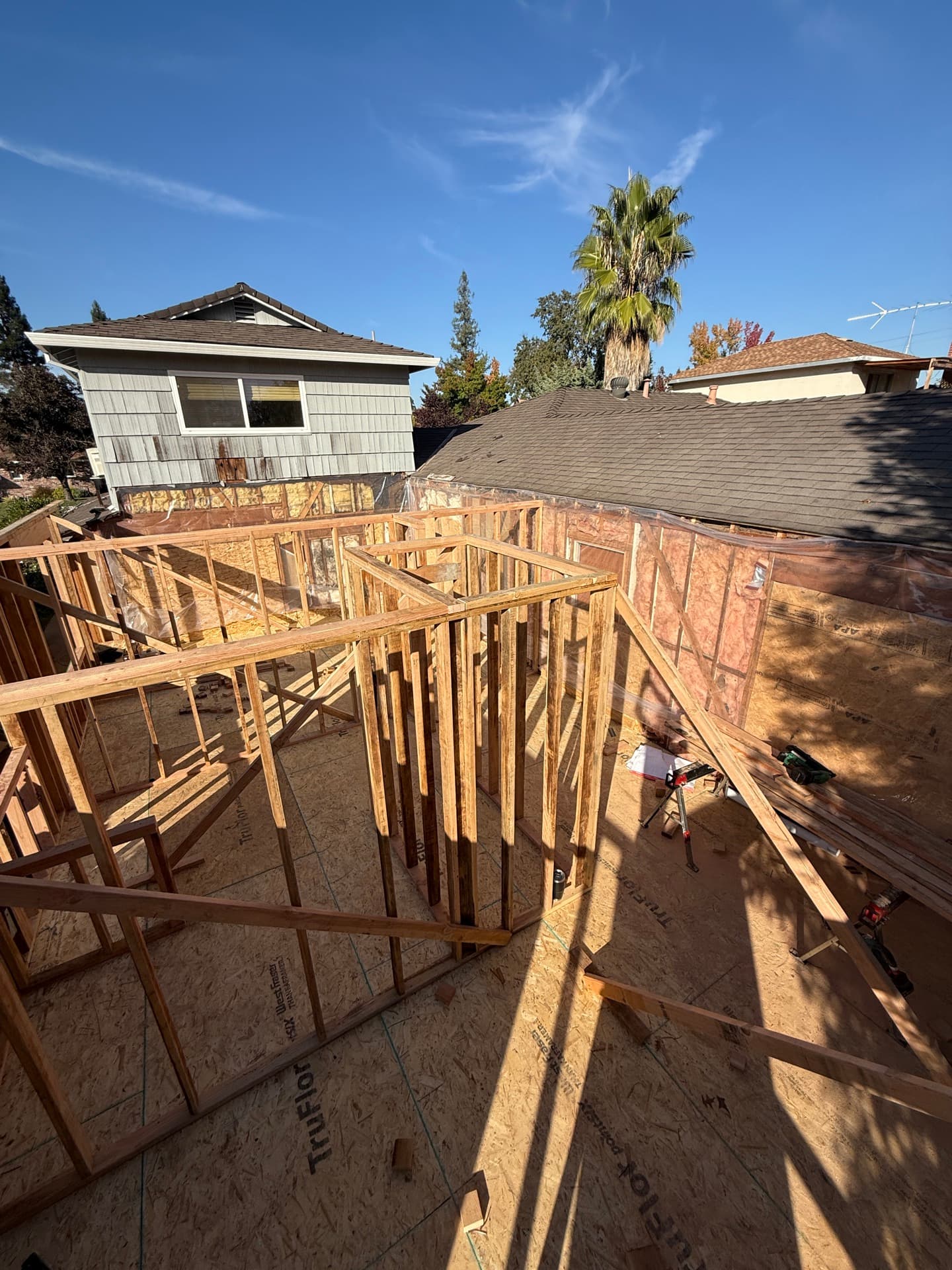
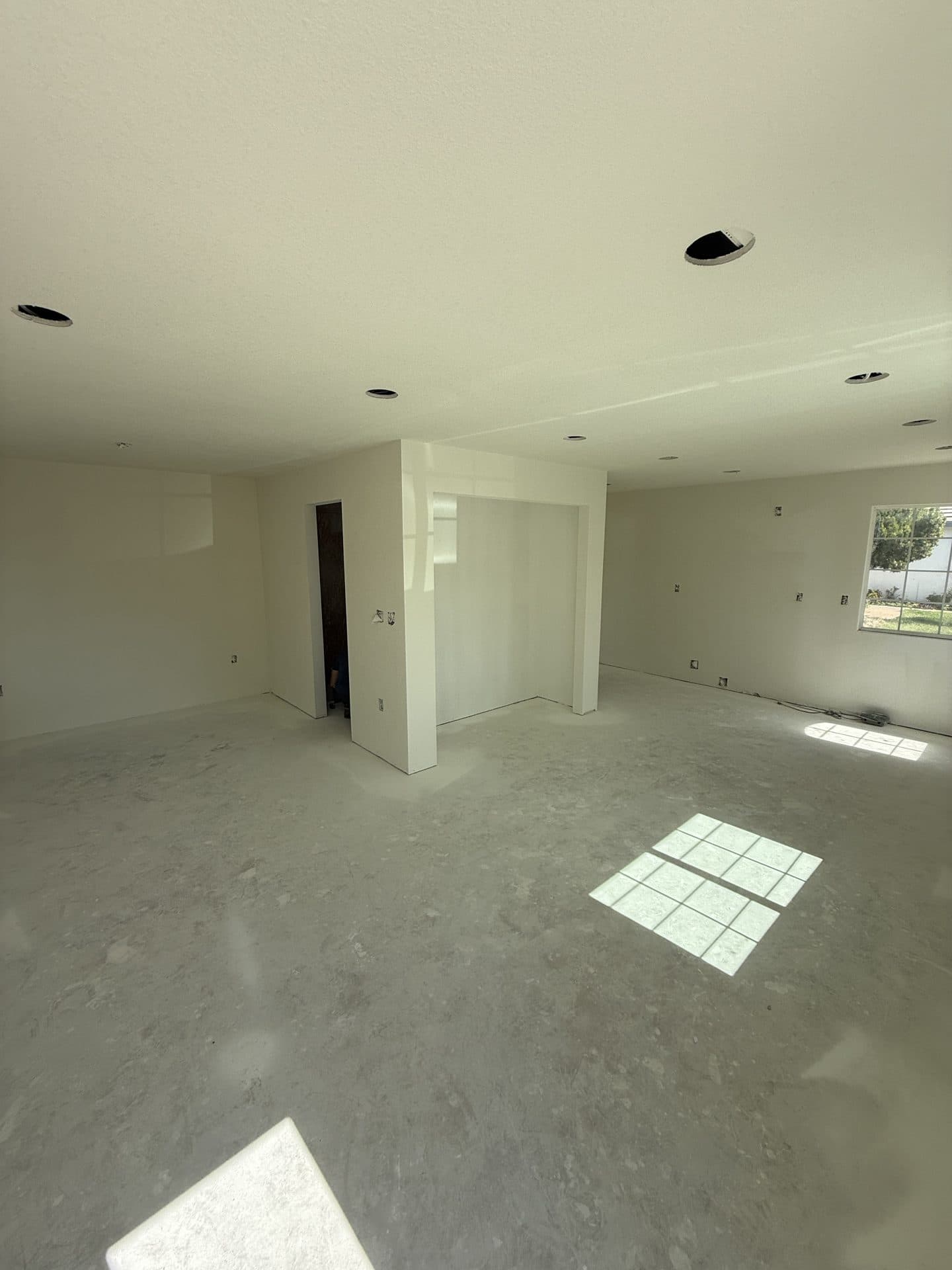
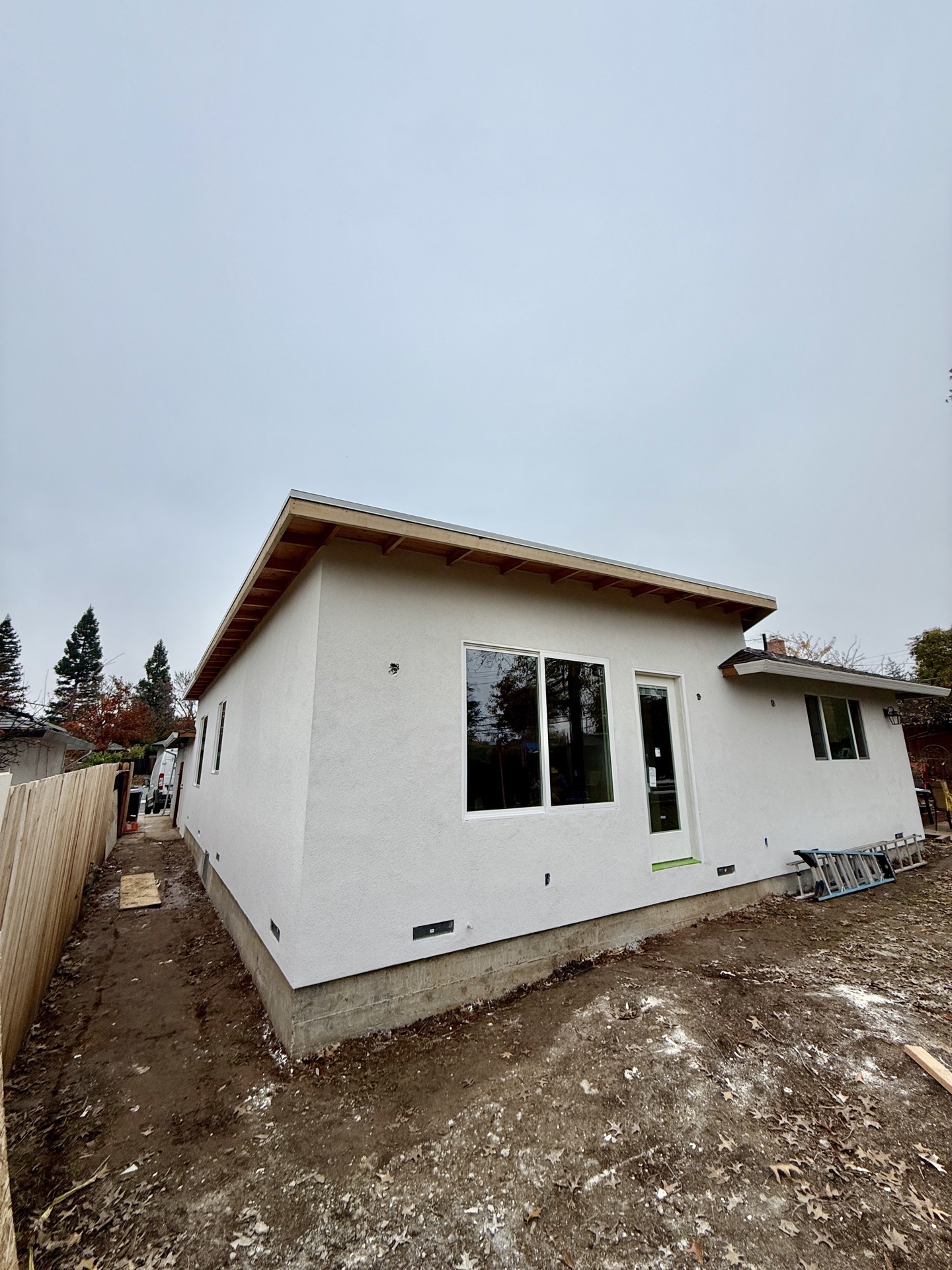
The wall you share is the whole ballgame. I cut into the existing structure, and once that wall is opened up, every hidden thing your house has been quietly living with shows itself — old framing, a header that was never sized for a door, wiring that predates the current code. On older Napa homes near downtown that's common. So I plan for the tie-in to take longer than the pretty parts. The new roof has to meet the old roof without a leak, the siding has to match or transition cleanly, and the floor heights have to line up so you're not stepping down into the new unit. Done right, nobody can tell where the old house stops and the ADU starts. Done lazy, it looks bolted on and it leaks.
Structural header and shear at the shared opening
Roof and siding matched or transitioned cleanly
Floor heights aligned so the units read as one
Ground and shaking
Napa soil and the West Napa fault
Napa doesn't let you forget 2014. The South Napa earthquake, a magnitude six on the West Napa fault, red-tagged brick buildings downtown and rattled the whole valley. Anyone building here takes seismic detailing seriously, and so do I. An attached ADU has to share lateral load with the existing house, which means I look hard at how the old structure is anchored before I tie new framing to it. Then there's the dirt. The valley floor and the blocks near the Napa River sit on soft river alluvium, and that's a different foundation conversation than a hillside lot up in the vineyard estates. I'd rather have a soils engineer weigh in early than guess. On the valley floor you also check flood elevation, because the river has a long memory.
Seismic tie between old and new framing, not just bolted
Soft river alluvium near the Napa River needs engineering
Flood-elevation check on valley-floor and downtown lots
Finish
A unit that earns its keep
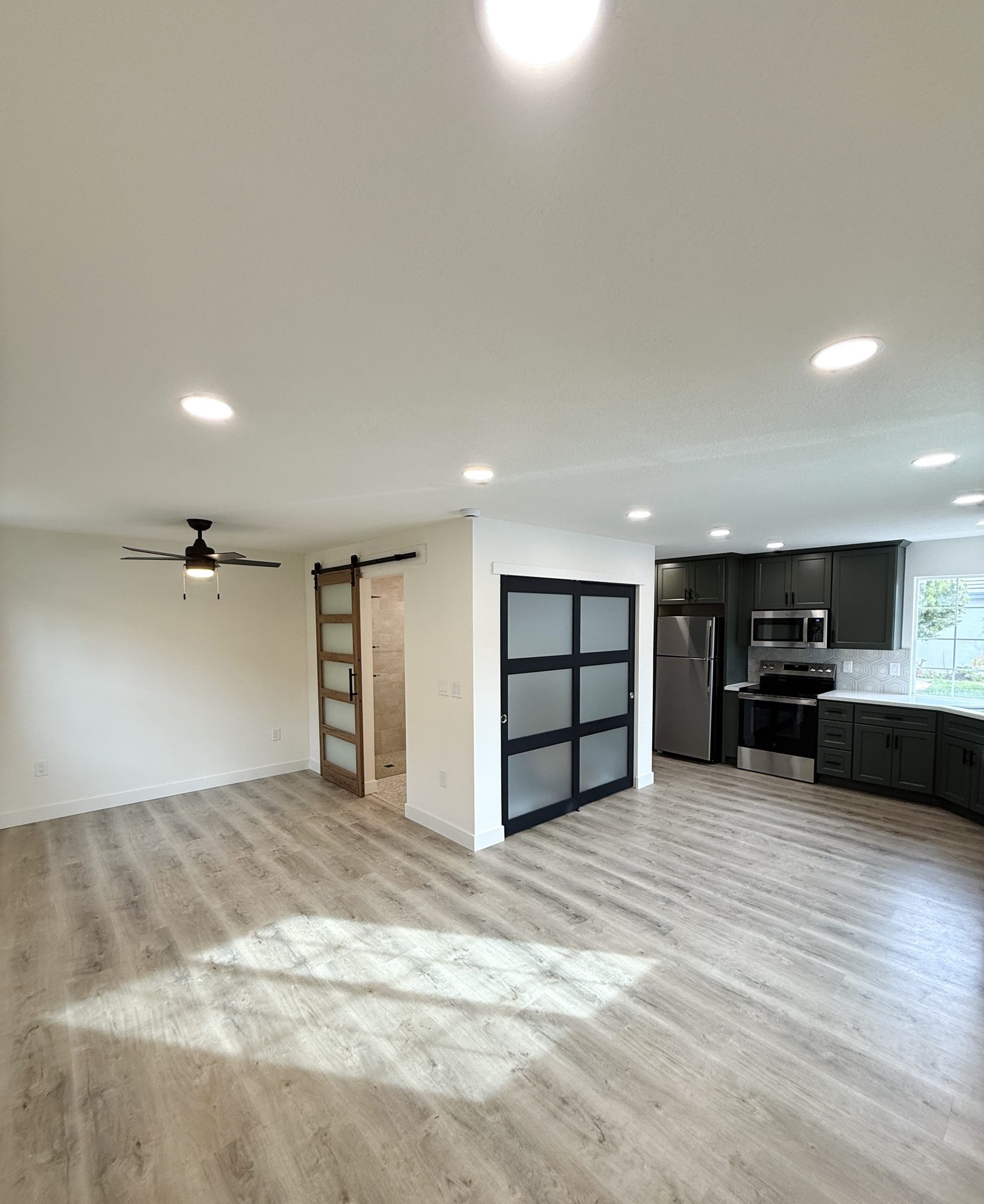
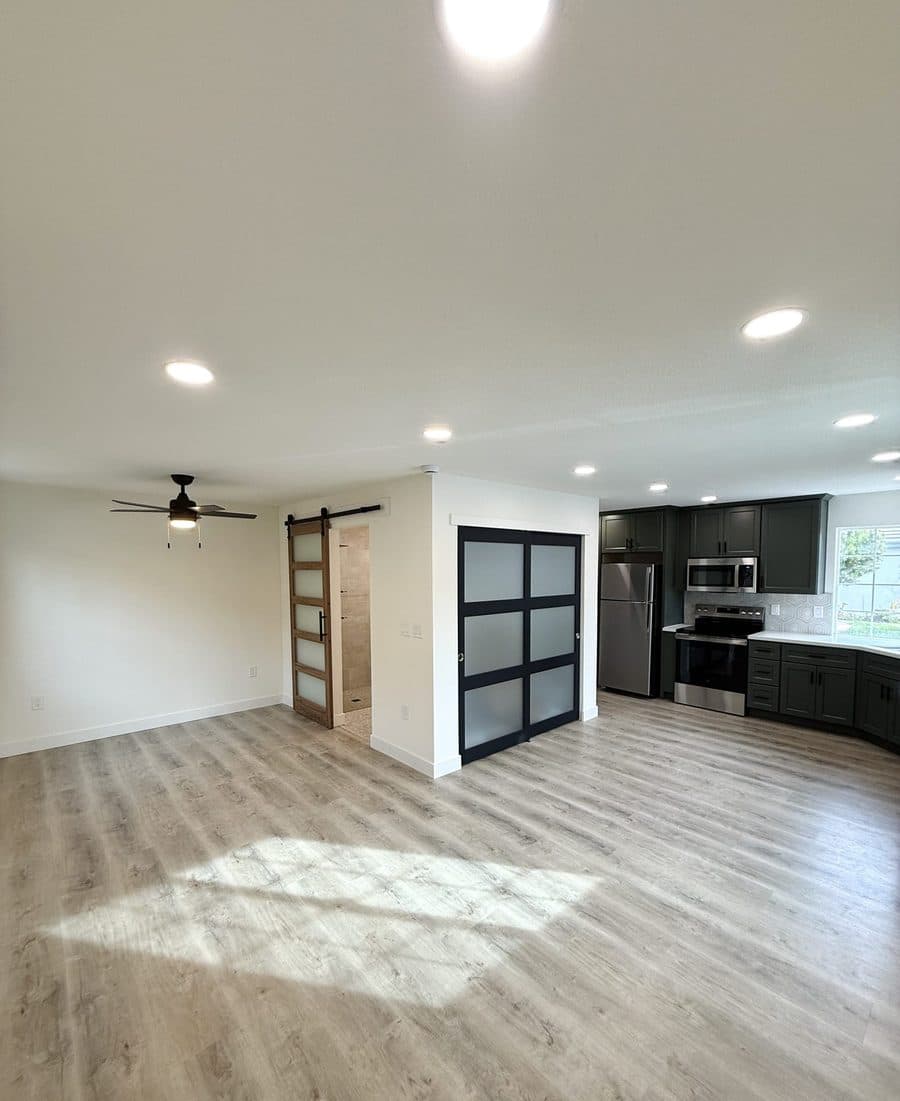
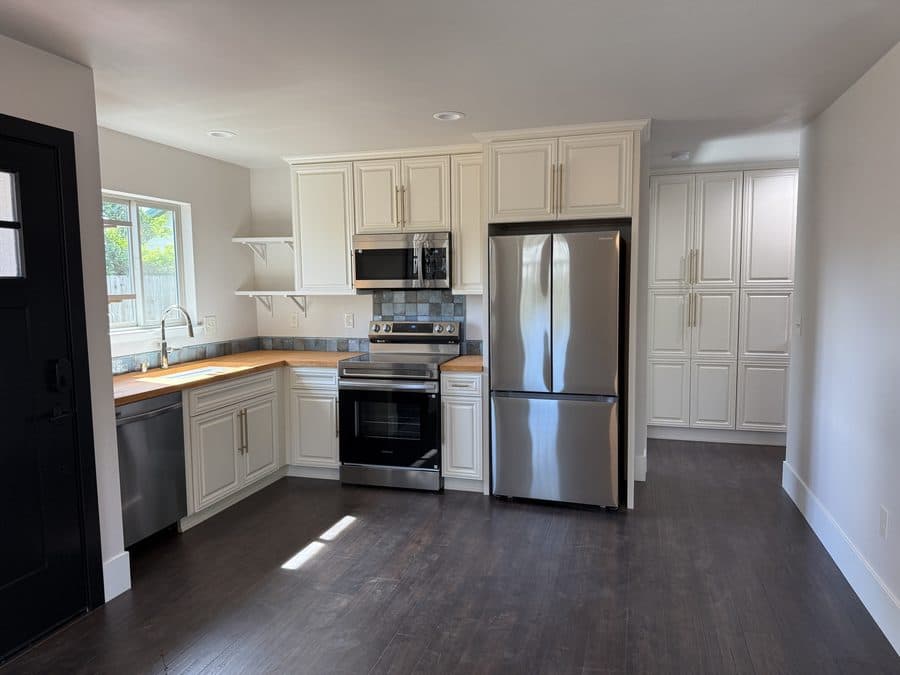
An attached ADU in Napa usually has a job. It houses a vineyard or restaurant worker, a parent who's done with stairs, or a grown kid who can't touch valley prices. So I build the inside to last, not to photograph. Real cabinets, a kitchen that actually cooks, a bathroom laid out for daily use, and enough sound separation on the shared wall that two households aren't listening to each other. PG&E powers it, and given how often PSPS shutoffs hit this county in fire season, I'll talk to you about a transfer switch or a battery if you want the unit to ride out an outage. The point is a space someone lives in for years, not a glorified guest room you regret.
Sound-rated shared wall between the two households
Full kitchen and bath built for daily long-term use
PG&E service with optional backup for PSPS season
Build Smart. Invest Wise.
Build Your ADU. Your Investment, Your Future.
From design to move-in, we handle everything. Transparent pricing, on-time delivery, and uncompromising quality.
Custom Designs
Tailored to you
Built to Last
Premium materials
Fast Turnaround
On-time delivery
Full-Service
From start to finish
30+
Years of Experience
120+
ADU Projects Completed
100+
Happy Homeowners
Built for Value. Designed for Life.
Trusted by homeowners across Sacramento & surrounding areas.
ADU Estimator
Know Your Numbers Before You Commit
Get an instant estimate of construction cost, rental income, ROI, and timeline. No email required to see your number.
“Every ADU we build is designed to add long-term value and open new possibilities for your property. Let's build something great together.”
— Tim, ADU Specialist
Custom Designs
Built to fit your property & needs
Turnkey Process
We handle permits, plans & everything
Built to Last
Quality craftsmanship that stands the test
Financing Made Simple
$0 Down Options. Build Now, Pay Over Time.
You shouldn't have to drain your savings to build wealth. We partner with trusted ADU lenders to find financing that fits — many homeowners build with little to nothing out of pocket.
Home Equity (HELOC)
Tap your existing equity at competitive rates — the most popular way to fund an ADU.
Renovation Loans
Finance the build against your home's projected after-completion value.
ADU-Specific Financing
Specialized lenders who underwrite based on the rental income your ADU will produce.
Cash-Out Refinance
Roll the project into a new mortgage and keep one simple monthly payment.
Estimate Your Monthly Payment
See what financing your ADU could look like — and how rental income can help cover it.
$180,000Loan amount
Credit Score
Very good · 700–739
Estimated Monthly Payment
$1,320/mo
At 7.99% APR over 30 years (illustrative)
Often offset by $2,000–$3,500/mo in rental income
No prepayment penalties with most partners
Pre-qualification with no impact to your credit
Illustrative only — not a loan offer. Actual rates and terms are set by third-party lenders based on your qualifications.
Service areas
Where we build
Headquartered in the Greater Sacramento Area and serving homeowners from the Sierra foothills down through the Bay Area. Don't see your city? We probably still get there — just ask.
The most common things Sacramento homeowners ask before starting an ADU project.
Fair question, and I'll be straight about it. I run a design-build shop out of Sacramento, so I'm not the local guy who grew up off Jefferson Street. But Napa is one of my closer Bay markets, not one of the far coastal ones. It's about sixty miles, an hour out on I-80 and over on Highway 12 and 29, an easy familiar run. I make it without a fuss, and my crew does too. What you get for that drive is a contractor who actually shows up, runs his own people instead of subbing everything to strangers, and answers the phone. If you've already got a Napa builder you trust who's free, hire them — proximity is worth something. But if you're getting ghosted or quoted the moon, the hour I drive is a small price for someone who'll finish.
Depends on where your property actually sits. If you're inside the City of Napa — downtown, Alta Heights, Browns Valley, the neighborhoods on the valley floor — the permit goes through the City of Napa building department, and water service runs through City of Napa Water. If you're out in the unincorporated county on a vineyard or hillside estate, then it's Napa County's planning and building department, and your water and septic situation is its own conversation. The two paths have different rules, especially on flood, fire, and septic, so the first thing I do is pin down which jurisdiction owns your parcel. California's statewide ADU law sets the floor for both, which helps, but the local department still drives the timeline. I handle the submittal either way and stay on them through plan check.
Napa is really two different ground stories. Down on the valley floor and the blocks near the Napa River, you're on soft river alluvium — and in spots near the water, closer to bay mud. That soil moves, and it doesn't carry load the way firm ground does, so an attached ADU there often wants an engineered foundation rather than a basic slab. Up in the hillside vineyard estates it flips: now you're fighting slope, grading, and retaining walls instead of soft dirt. For an attached unit the extra wrinkle is matching the new foundation to whatever the existing house is sitting on, so the two don't settle at different rates and crack the shared wall. I get a soils report early on anything questionable. Guessing at the foundation is how you pay twice.
Power is PG&E, same as most of Northern California. Water inside the city is City of Napa Water. The thing worth planning for here is PSPS — those public safety power shutoffs PG&E runs when fire weather kicks up in late summer and fall. Napa sees them, especially the hillside and vineyard-edge properties closer to the fire zones. For an attached ADU, the good news is you're usually extending the existing electrical service a short distance, so the panel upgrade question is simpler than a detached build. But if the unit is going to house someone year-round, I'll ask whether you want a transfer switch and a generator, or a battery, so the ADU stays livable when the grid goes dark for two or three days. Not everyone needs it. It's worth a conversation, though.
It's expensive, no point pretending otherwise — Wine Country pricing is real and labor and materials cost more here than in the Central Valley. But the demand side is genuinely strong. Napa runs on tourism, wine, and hospitality, and that whole economy needs workers who have to live somewhere. Vineyard hands, restaurant staff, hotel workers — there's a real workforce-housing squeeze, and small attached units help fill it. Plenty of owners also build for family: aging parents, adult kids priced out of the valley, multi-generational setups. I won't quote you a rent number, that's not my lane and it shifts. What I'll tell you is the units I build here don't sit empty for lack of takers. Whether the return pencils out depends on your land, your goals, and how you finance it.
I'll give you a real range instead of a dodge. Attached units generally run cheaper per square foot than detached because you skip the second foundation and the long utility trenches. In Napa, with Wine Country labor and material pricing, a straightforward attached ADU tends to land somewhere in the mid-to-high $300,000s to around $500,000 depending on size and finish. It climbs from there if your lot throws curveballs — soft river-alluvium soil needing an engineered foundation, flood elevation requirements downtown, fire-hardening up in the hills, or an old house that needs structural work where the new wall ties in. A small, simple attached unit on good ground sits at the lower end. A larger unit with a tricky tie-in and site work sits higher. I price your actual conditions after I walk the property, not off a chart.
If you're in the hillside or vineyard-edge zones, very likely yes. The 2017 Atlas Fire and the 2020 Glass Fire burned through the Napa hills and changed how seriously this gets taken. Properties in the wildland-urban interface and the mapped fire zones have to build to Chapter 7A — that means a Class A fire-rated roof, ember-resistant vents, fire-rated or noncombustible siding, and defensible space cleared around the structure. For an attached ADU that's actually a little easier than detached, because you're matching and extending the existing home's exterior assemblies rather than starting fresh. But if your main house predates 7A, we may end up upgrading the shared exterior so the addition complies. Down on the valley floor inside the city, 7A usually isn't triggered. I check your fire zone designation before we design anything.
It's a real factor for a chunk of Napa. The Napa River runs right through the city, and the valley floor plus a lot of downtown sits in a flood zone — the river flood-protection project is part of the local story for a reason. If your parcel is in a FEMA flood zone, the lowest livable floor of new construction has to be raised above the base flood elevation, and that drives design choices for an attached ADU. Sometimes it means raising the addition's floor, which then bumps into matching the existing house's floor height — a tie-in puzzle I solve at the design stage, not after framing. I pull the flood map for your specific address up front. If you're up in the hills, flooding isn't your issue — slope and fire are. The hazard depends entirely on where you sit.
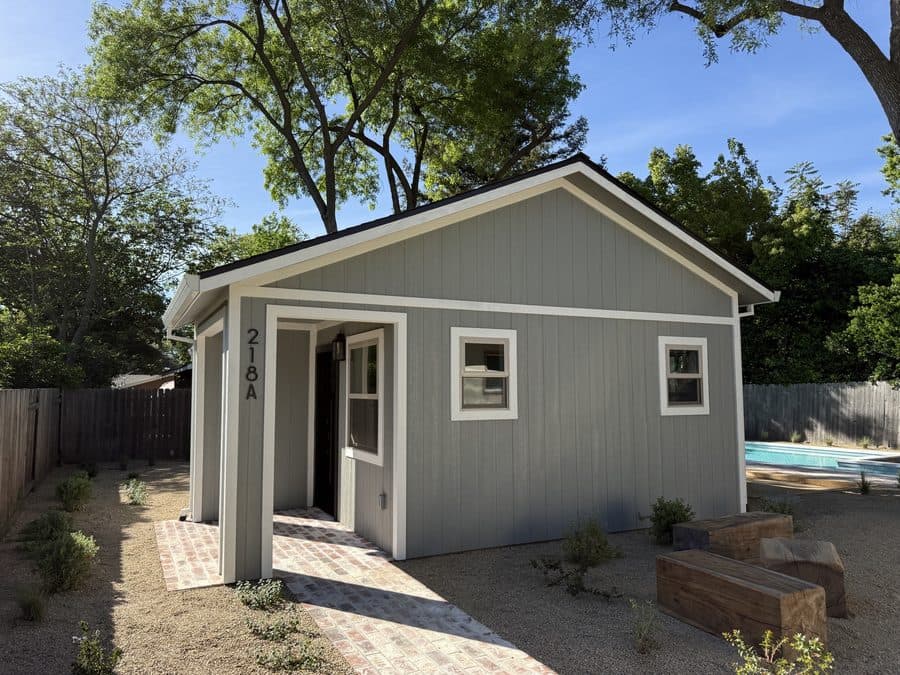
Matching is the whole job, and it's the part cheap builders botch. With an attached ADU you're extending a structure that already has a roof pitch, a siding type, window proportions, and a color. My job is to make the new wall, roof, and exterior read as one continuous house, not an obvious add-on stuck to the side. That means matching the roof line where the new section meets the old, carrying the same siding across or transitioning it deliberately, and keeping window styles consistent. On older Napa homes near downtown, exact material matches sometimes don't exist anymore, so we find the closest honest solution and detail the transition cleanly. I'd rather spend an extra day on the roof junction and the siding line than hand you a unit that screams "addition" from the curb. If it's done right, your neighbors won't be sure where the original house ends.
Plan for roughly nine to fourteen months end to end, and most of the early stretch is paper, not lumber. Design and engineering take a couple months, then the City of Napa or Napa County plan-check process runs its course — and that's the part I can't fully control, since it depends on the department's queue and how many review rounds your plans take. Once permits are in hand, the actual build on an attached unit usually moves a little faster than detached because there's no separate foundation and the utility runs are short. The wild card is the tie-in: when I open the shared wall, an old house can surprise us with framing or wiring that needs fixing, and that adds time. I build float into the schedule for exactly that. I'd rather quote honest and finish early than promise fast and blow past it.
Other services
Not quite the right fit?
Every Sacramento ADU project is different. Here are the other paths we build under one roof — and we're happy to talk through which one fits your lot best.
We treat every home like it's our own — quality work, clear communication, and happy homeowners.
PaulOwner · Future Generation
10 min read2,102 words8 sections
Building an Attached ADU in Napa — A Straight-Talk Guide
I build attached ADUs, additions that share a wall with your existing house, and I run my crew out of Sacramento about an hour over to Napa to do it. This guide is the honest version: what the shared-wall approach saves you, where Napa's soil, seismic history, fire zones, and flood maps complicate things, and which building department you'll actually deal with. No sales pitch, just how it really goes.
01Section
Why pick attached over detached
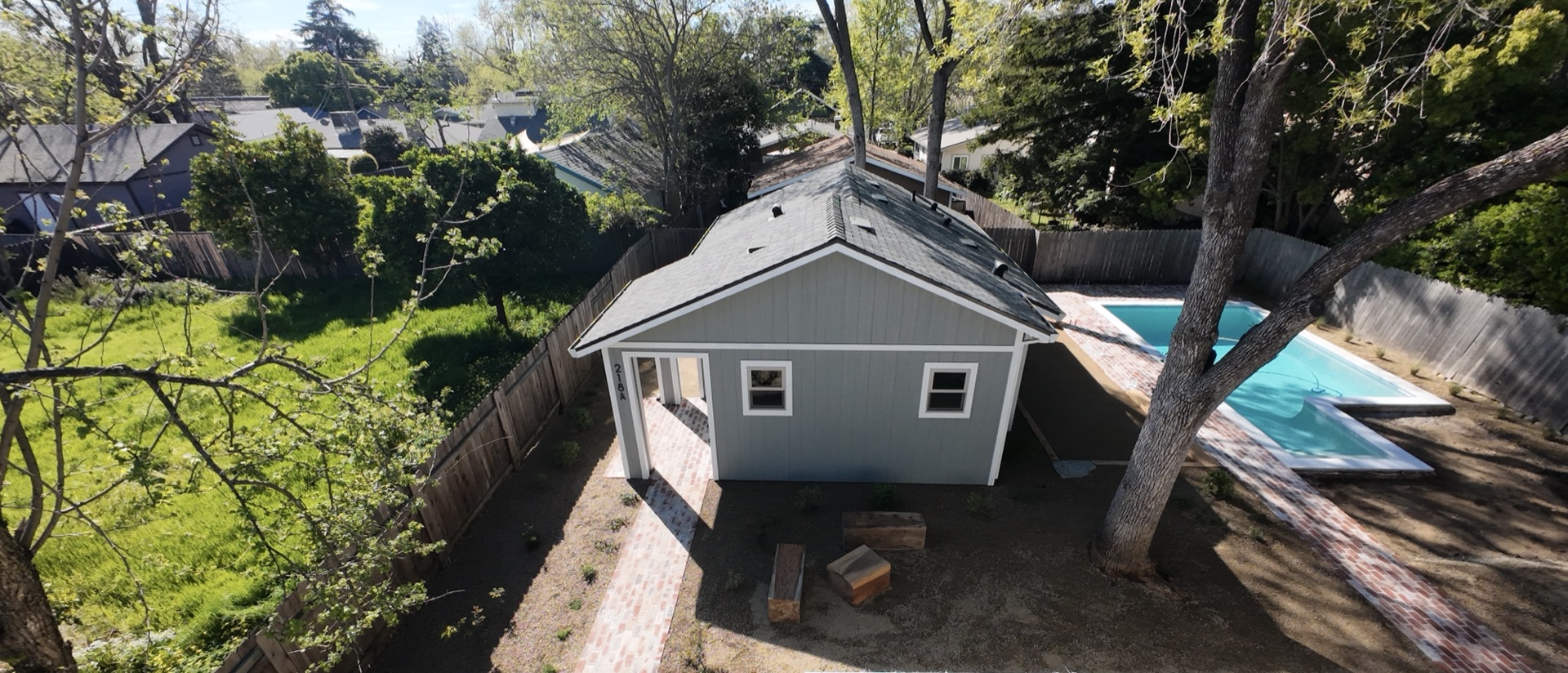
An attached ADU shares one wall with your main house, and that single fact reshapes the whole budget. You skip the second foundation. The plumbing and electrical only travel a few feet from the existing house instead of trenching across the yard. The roof can extend off what's already there. Add it up and an attached unit almost always costs less per square foot than a freestanding one. On Napa's tighter valley-floor lots, it also fits where a detached unit wouldn't.
The trade-off is freedom. With a detached unit you place it wherever the yard makes sense — sunny corner, away from the house, its own little world. Attached means you build where your house already sits and where that shared wall lands. If the only available wall faces a fence three feet away, that's your view. You can't chase the prettiest spot. You work with the bones the existing structure gives you, and you make those bones work hard.