CA License #1119373Licensed, Bonded & InsuredPowered by Future Generation ConstructionFuture Generation
Sunnyvale · Detached ADU
A freestanding backyard unit, built for Sunnyvale lots and rents.
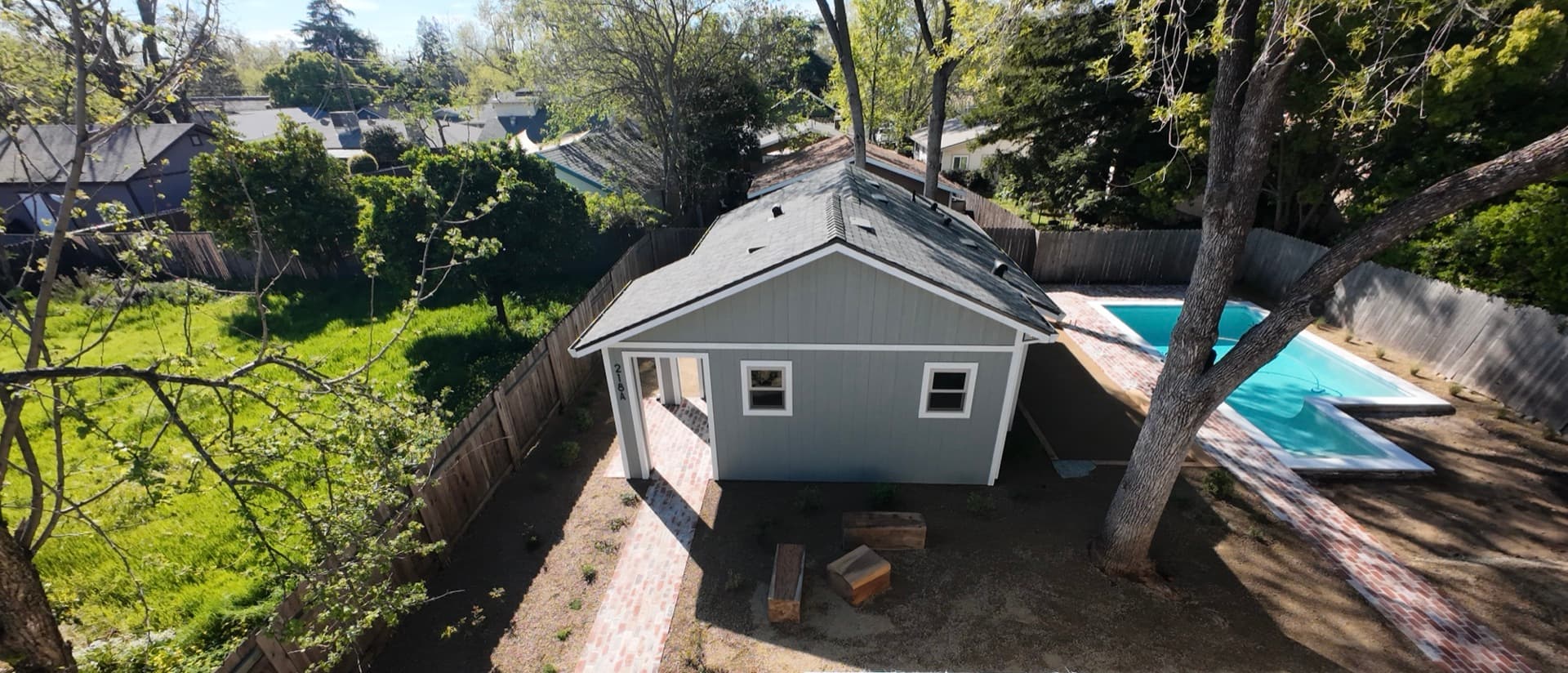
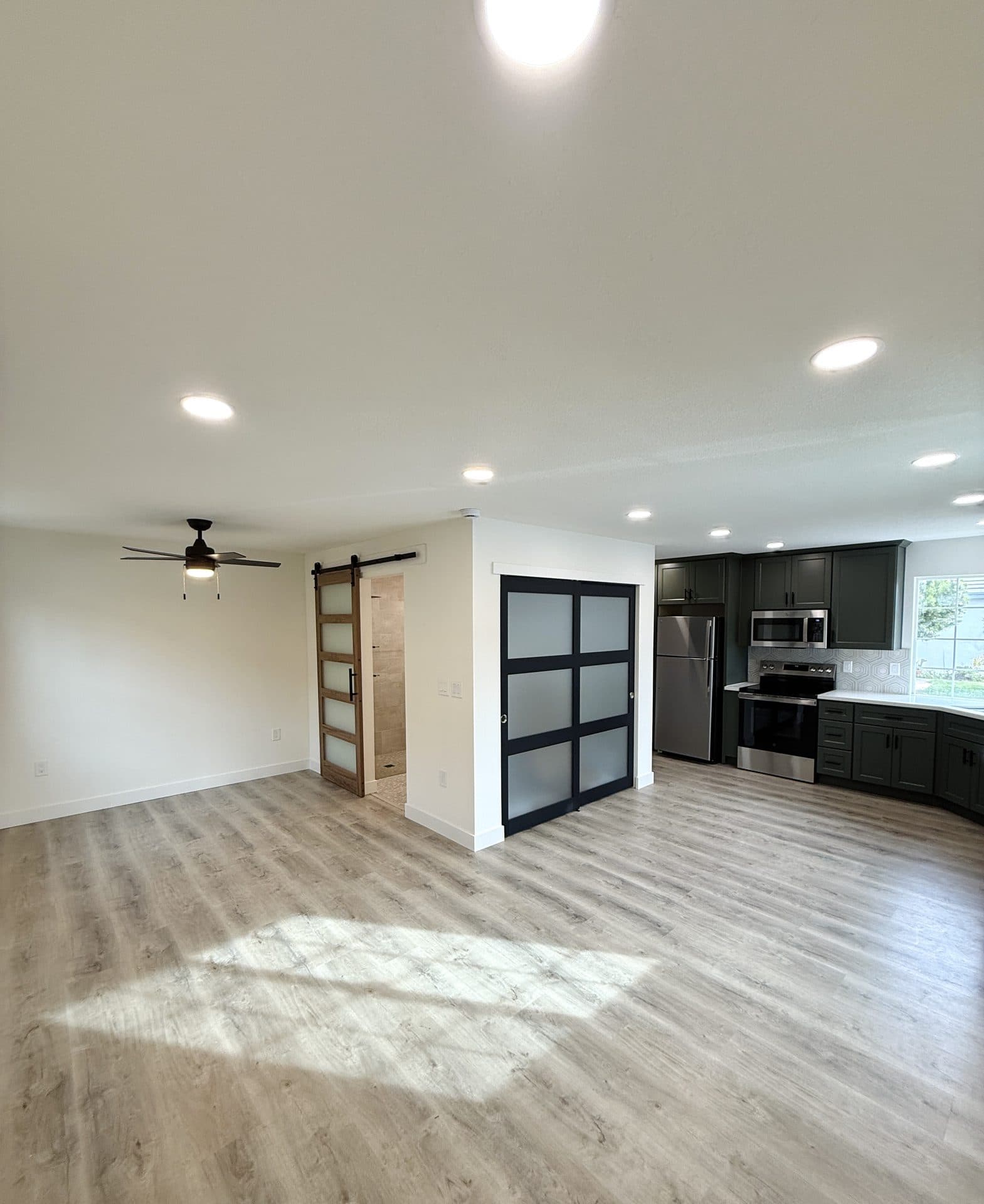
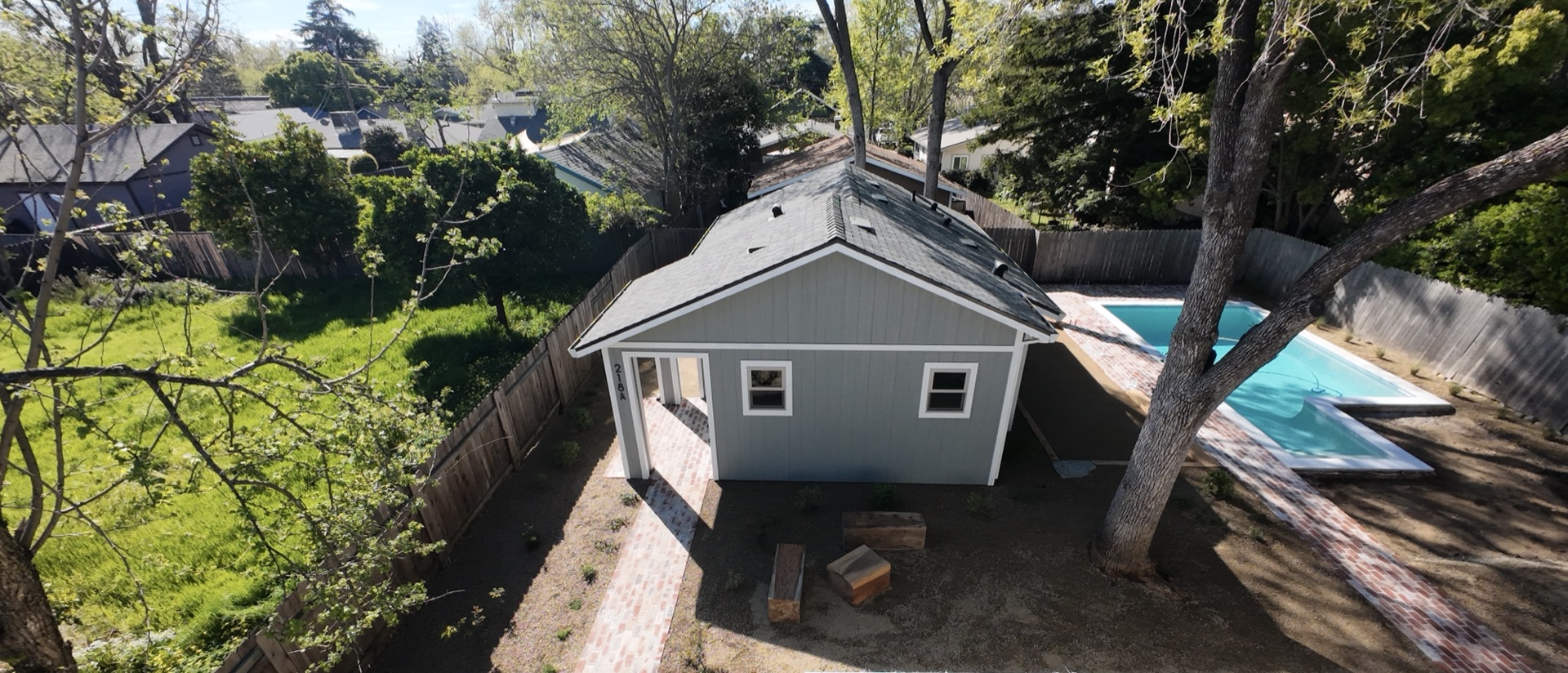
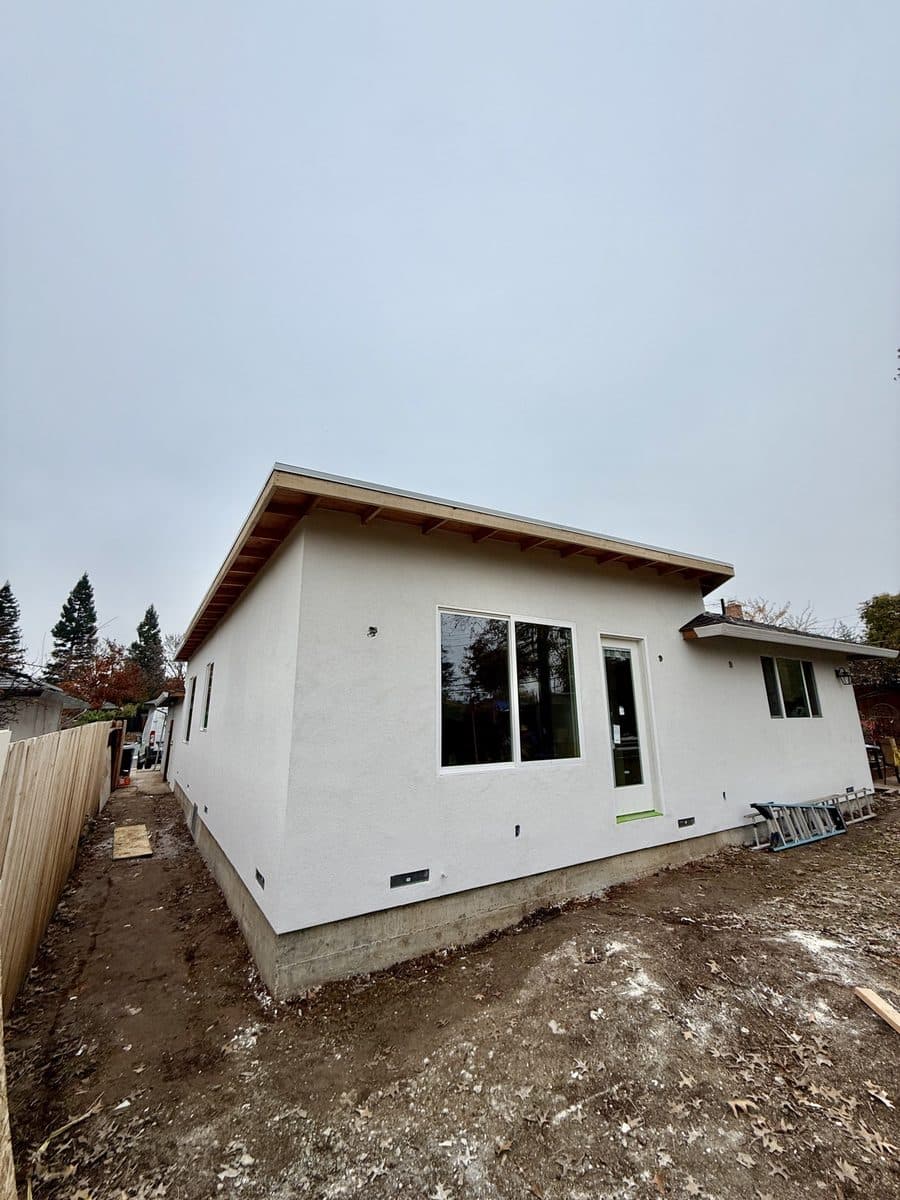
Own foundation, own roof, real distance from the house — a standalone ADU sited tight on a Silicon Valley lot where the rent math is what makes a six-figure build pencil.
Trusted by homeowners across Sacramento & surrounding areas.
Detached ADU in Sunnyvale — fast facts
City
Sunnyvale
ADU type
Detached ADU
Contractor license
CSLB #1119373
Free estimate
(916) 677-9774
Last updated
Stands alone, shares nothing
A detached unit is its own building
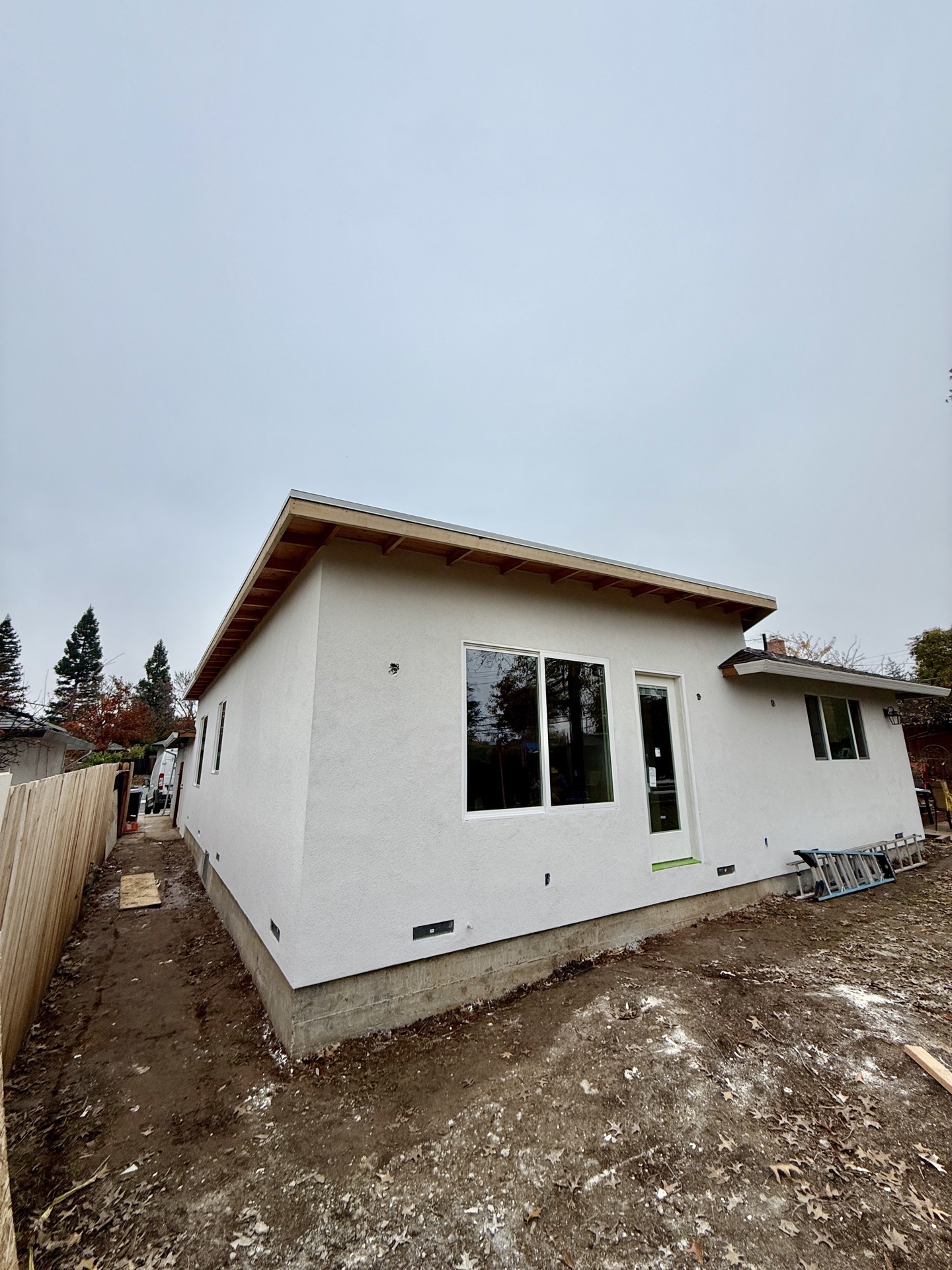
The thing that makes a detached ADU worth a Bay Area price tag is the same thing that makes it the toughest type to put up — it touches your house nowhere. Its own slab. Its own framing. Its own roof. Sunnyvale lots are modest and the dirt under them is worth a small fortune, so where the unit lands matters more here than almost anywhere we work. I orient it for sun, for the setbacks, and for whatever backyard you actually want to keep, then I plan how concrete and lumber get from the curb to the rear before anyone quotes a dollar. On a Birdland ranch lot or an Eichler tract, that placement call is most of the job. Detached is the most flexible ADU there is. It is also a full ground-up build, not a conversion.
Independent foundation, framing, roof and full exterior envelope
Sited for sun, setbacks and the yard you want to protect
The most flexible ADU type — but a ground-up build, not a conversion
City of Sunnyvale permitting
Sunnyvale runs your permit
Your detached ADU permit, the plan check, and every inspection run through the City of Sunnyvale — its own building and planning departments, not Santa Clara County. One counter, one rulebook. Here is the part most inland owners aren't braced for. Sunnyvale has leaned into housing and is reasonable about ADUs, which helps. But it is still a high-cost Silicon Valley city: review is strict, the fees are steep, and the calendar moves slower than anything you'd see in Sacramento. The Eichler areas add a wrinkle — those flat-roof, post-and-beam homes are design-sensitive, and a freestanding unit dropped behind one gets a harder look at how it fits the mid-century street. We pull your zoning, your neighborhood, and any design flags on the first visit, because all of it shapes the drawings.
Reviewed by the City of Sunnyvale — reasonable on ADUs, but strict, high fees
Eichler-area lots are design-sensitive and reviewed for character
Complete plan set drawn in-house to cut correction rounds at a slow counter
The ground under Sunnyvale
Flat valley soil, faults nearby
Terrain is the easy half here. Sunnyvale sits flat on the valley floor, so you're not fighting a hillside the way you would up in the Bay Area hills — grading stays simple. The seismic side is the hard half. This is earthquake country, the region's active faults run close, and a detached ADU pours a brand-new foundation, so we engineer it for genuine ground shaking instead of dropping a stock slab. Anchored foundation, shear walls, hold-down hardware tying the whole structure down. Flat doesn't mean carefree: that valley floor is soft alluvial soil, not bedrock, so we get a soils report and detail the foundation to the actual lot. On a flat Sunnyvale build, that's exactly where the structural budget goes.
Flat valley-floor ground — no slope to fight, straightforward grading
Foundation engineered for ground motion near the region's active faults
Soft valley soil still needs a soils report and a detailed foundation
Access and utilities
Getting the build to the backyard
Access is the first thing I check on a Sunnyvale lot, every time. An Old Sunnyvale or Heritage District home near Murphy Avenue might have a skinny driveway and a side yard you can just barely squeeze through — which means the concrete and the framing lumber come around by pump or by hand, and that cost goes in the proposal honestly rather than surfacing as a surprise. The Birdland and Ortega Park ranch tracts and the Eichler blocks tend to be a touch more forgiving, but none of it is the wide-open side-yard access you'd get on an inland lot. Power is PG&E. A true detached unit gets its own utility runs — a trench from the main service back to the unit for power, water, and sewer, routed around whatever's already buried under a yard that's been built on for sixty-plus years.
Materials path mapped first — tight lots often need a concrete pump
Older Heritage District and Old Sunnyvale lots can be very tight
Separate PG&E power, water and sewer runs on a planned trench route
Build Smart. Invest Wise.
Build Your ADU. Your Investment, Your Future.
From design to move-in, we handle everything. Transparent pricing, on-time delivery, and uncompromising quality.
Custom Designs
Tailored to you
Built to Last
Premium materials
Fast Turnaround
On-time delivery
Full-Service
From start to finish
30+
Years of Experience
120+
ADU Projects Completed
100+
Happy Homeowners
Built for Value. Designed for Life.
Trusted by homeowners across Sacramento & surrounding areas.
ADU Estimator
Know Your Numbers Before You Commit
Get an instant estimate of construction cost, rental income, ROI, and timeline. No email required to see your number.
“Every ADU we build is designed to add long-term value and open new possibilities for your property. Let's build something great together.”
— Tim, ADU Specialist
Custom Designs
Built to fit your property & needs
Turnkey Process
We handle permits, plans & everything
Built to Last
Quality craftsmanship that stands the test
Financing Made Simple
$0 Down Options. Build Now, Pay Over Time.
You shouldn't have to drain your savings to build wealth. We partner with trusted ADU lenders to find financing that fits — many homeowners build with little to nothing out of pocket.
Home Equity (HELOC)
Tap your existing equity at competitive rates — the most popular way to fund an ADU.
Renovation Loans
Finance the build against your home's projected after-completion value.
ADU-Specific Financing
Specialized lenders who underwrite based on the rental income your ADU will produce.
Cash-Out Refinance
Roll the project into a new mortgage and keep one simple monthly payment.
Estimate Your Monthly Payment
See what financing your ADU could look like — and how rental income can help cover it.
$180,000Loan amount
Credit Score
Very good · 700–739
Estimated Monthly Payment
$1,320/mo
At 7.99% APR over 30 years (illustrative)
Often offset by $2,000–$3,500/mo in rental income
No prepayment penalties with most partners
Pre-qualification with no impact to your credit
Illustrative only — not a loan offer. Actual rates and terms are set by third-party lenders based on your qualifications.
Service areas
Where we build
Headquartered in the Greater Sacramento Area and serving homeowners from the Sierra foothills down through the Bay Area. Don't see your city? We probably still get there — just ask.
The most common things Sacramento homeowners ask before starting an ADU project.
Fair question, and I'll give you the straight version. We're a Sacramento design-build contractor, and Sunnyvale sits roughly 2.5 hours south of our home base — call it a two-hour-plus drive when the traffic cooperates, which down here it rarely does. We extend out for two kinds of owners: ones who'd rather have our craftsmanship and our pricing than what a local Silicon Valley outfit quotes, and larger detached projects worth the windshield time. I'm not going to pretend we're around the corner. What we bring is a crew that builds detached ADUs as bread-and-butter work, a fixed-price contract, and rates that — even after the travel — often come in under local bids on a $400K-plus job. Sunnyvale's rent math is what makes a detached unit pencil, and that's exactly the kind of project worth the trip. For a tiny, simple unit, a builder five minutes away may be the smarter call, and I'll say so.
With the City of Sunnyvale. It's its own incorporated city, so your detached ADU permit, plan check, and inspections all go through the city's building and planning departments — not Santa Clara County. One counter. The encouraging part is that Sunnyvale has pushed on housing and is reasonable about ADUs, so the policy side is broadly on your team. The catch is that it's still a high-cost Silicon Valley city: review is strict and slow by inland standards, and the fees run high. If your lot is in or near one of the Eichler areas, expect extra attention to how the unit reads against that mid-century character. We confirm your zoning, your neighborhood, and any design flags on the first visit so the package is built for the Sunnyvale counter from the start.
It does, and honestly the numbers are the entire reason owners here build despite what it costs. Silicon Valley ADU economics are a different planet from Sacramento. A detached unit in Sunnyvale commonly runs $400K to $750K-plus — well above what the same unit costs inland. But the rents are also far higher, and Sunnyvale's demand is about as durable as it gets: Apple's campuses are minutes away, LinkedIn and a dozen other employers ring the city, and there has never been enough housing for the people they hire. High land value plus very high rents is precisely why the math pencils even at those build costs. I won't write a rent figure into your proposal — that's between you and the market — but the demand is why so many owners here go detached instead of skipping the project entirely.
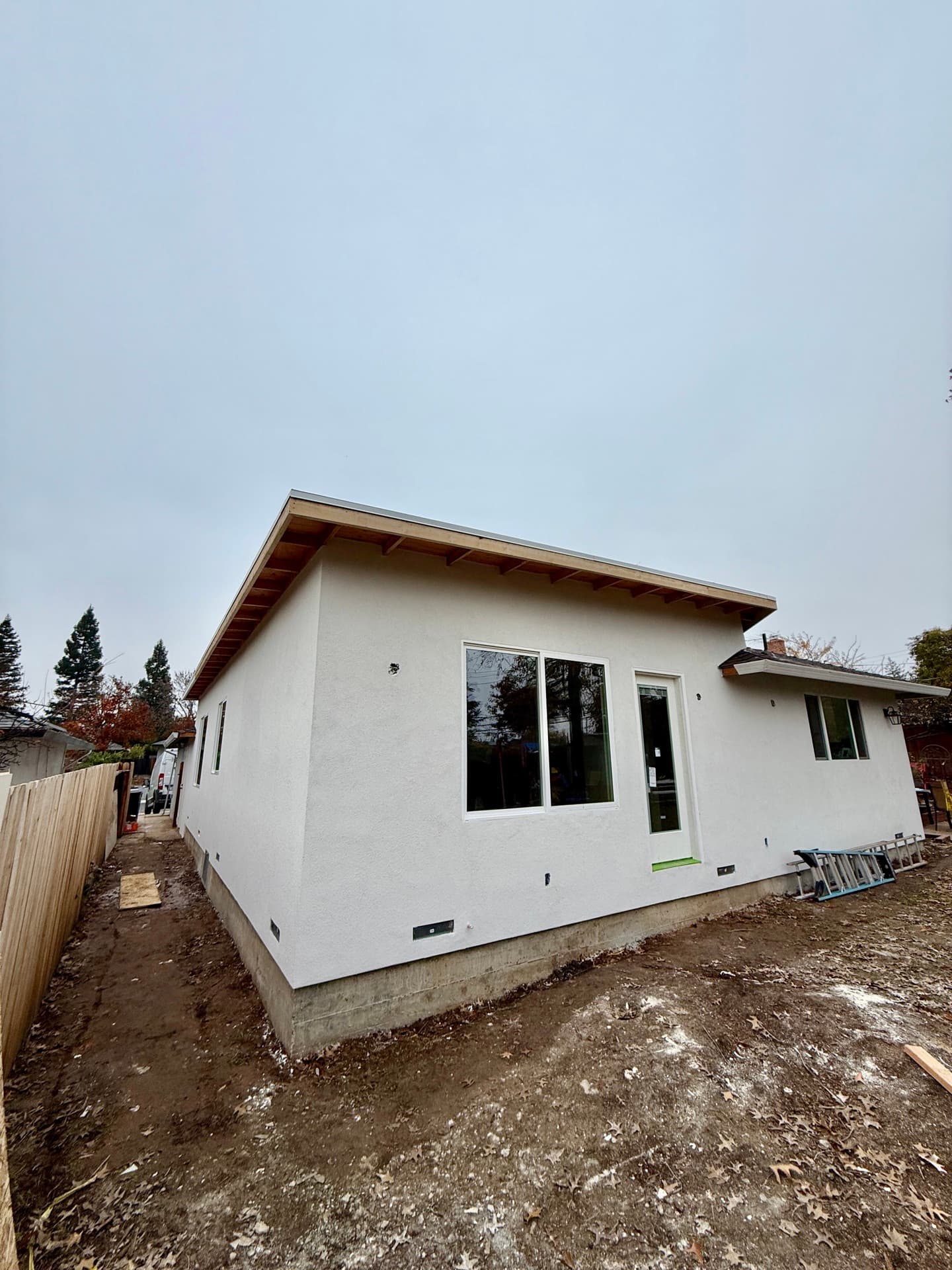
Yes, and Eichler lots are some of my favorite backyards to build in — but they ask for respect. Those mid-century tracts are flat-roof, post-and-beam, glassy, and consistent in a way the city and the neighbors both clock instantly. A detached unit behind one gets looked at for how it sits against that character, so we don't drop a generic gable-roof box behind a flat-roof modernist home and call it finished. We can echo the low flat roofline, the clean horizontal lines, the post-and-beam feel, so the unit reads as deliberate rather than dropped in. The good news is those lots are flat valley floor, which keeps the foundation and the access straightforward. The design conversation is the part that takes real care — and it's worth getting right both for approval and for resale.
It drives the foundation, and that's how it should be. Sunnyvale is earthquake country — the region's active faults run close, and a detached ADU pours a brand-new foundation, so we engineer that foundation and the framing on top of it for real ground motion. Anchored foundation, shear walls, hold-down hardware tying the structure down so it doesn't walk in a quake. This isn't gold-plating. It's what the code and the local geology both demand. The terrain itself is easy — flat valley floor, no slope to manage — but the soil is soft alluvial ground, not bedrock, so we pull a soils report and detail the foundation to it. The upside of going detached is that a new, properly engineered building rides out a quake far better than an old converted structure with bones nobody can fully verify.
Yes, PG&E. Power, the service drop, any panel upgrade, and the new meter for your detached ADU all run through PG&E's application process — its own forms, its own timeline, which in the Bay Area can drag. A true detached unit needs its own utility runs, meaning a trench from the main service back to the unit for power, water, and sewer. On a tight Sunnyvale lot that's been built on since the ranch-home era, the trench routing has to dodge whatever's already buried, so we map it before we dig. We get PG&E going early, while the foundation work is underway, because the meter set is one of the things most likely to hold up your final sign-off if you leave it to the end.
Sunnyvale is one of the strongest rental markets in the country, and it comes down to jobs. Apple's headquarters and second campus sit right next door, LinkedIn is close, and the broader tech corridor pulls a steady stream of well-paid workers who need housing the city has never built enough of. A detached ADU with its own entrance and genuine separation from the main house is exactly the kind of unit that market wants, and it commands a premium over a converted room. Streets in Birdland, Ortega Park, and around the Heritage District all feel this demand directly. I don't quote rents, but the tech-worker demand is why so many Sunnyvale owners go detached over a conversion: a freestanding unit reads as a real separate home, and tenants pay for that separation.
Because you're pouring a brand-new engineered foundation and framing a brand-new roof, on top of all the exterior walls, siding, and weatherproofing of a standalone building. A garage or structure conversion reuses a slab and a roof that already exist. In Sunnyvale the new foundation also has to be engineered for serious seismic loads near the region's active faults, and detailed for soft valley soil — real money a conversion skips. What detached buys you is a freestanding unit you can place and orient where a tight lot allows, built to current seismic code from the dirt up, with a design that can answer to Eichler-area character where that matters. If lowest price is the only goal, a conversion usually wins, and I'll say that plainly rather than oversell the detached build.
Often yes, but it's the first thing we check, because the lots here are genuinely modest and the land is too valuable to guess. California's ADU rules carve out room — there are state size allowances a city can't zone away, and Sunnyvale has been more accommodating than a lot of its neighbors. On an Old Sunnyvale or Heritage District parcel, we measure the setbacks hard and site the unit to fit the buildable envelope, sometimes pushing it to the rear corner to save the yard. The Birdland and Ortega Park ranch tracts and the Eichler blocks tend to give a little more breathing room. The honest answer is that placement on a small lot is most of the design work — we walk it, measure it, and tell you straight what fits before anyone falls in love with a floor plan.
I'll give a range, then tell you why it moves. Silicon Valley numbers are nothing like Sacramento. A detached unit in Sunnyvale commonly lands in the $400K to $750K-plus band, all-in — design, engineering, permits, site work, the build, utilities, and finishes. A roughly 612 sq ft one-bedroom on a clean flat lot with decent access sits near the bottom; a larger custom unit, a tight lot needing a concrete pump, or an Eichler-area design that has to be detailed carefully climbs toward the top and past it. Three Sunnyvale things bend the number: the seismic engineering, the access on a tight older lot, and the high permit fees with slow review. I don't quote blind — we walk the lot, get the soils and access right, then write a fixed price.
Other services
Not quite the right fit?
Every Sacramento ADU project is different. Here are the other paths we build under one roof — and we're happy to talk through which one fits your lot best.
We treat every home like it's our own — quality work, clear communication, and happy homeowners.
PaulOwner · Future Generation
9 min read1,890 words8 sections
Building a Detached ADU in Sunnyvale — A Straight-Talk Guide for Silicon Valley Owners
A detached ADU is the version most Sunnyvale owners actually want: a freestanding unit with its own foundation, its own roof, and its own front door, set off the main house. It's also the version with the most moving parts, and Sunnyvale piles on a few the inland market never sees. This guide is about building one here specifically — the city permit path, the flat ground and nearby faults that still dictate the foundation, the Eichler tracts that earn a design look, Apple-and-LinkedIn rental demand, and the real Silicon Valley numbers. We're a Sacramento builder who extends out here, so I'll be honest about the drive and about where the math works.
01Section
What "detached" actually means here
Detached means freestanding. The unit doesn't touch your house — its own slab or foundation, its own roof structure, four of its own exterior walls. That's the line that separates it from an attached ADU, which shares a wall with the main home, and from a conversion, which reuses an existing shell. All three are legitimate ADUs under California law. They build, cost, and live differently, and detached is the most independent of the three.
The pull of detached in Sunnyvale is that independence, even on a small lot. The land here is worth a fortune and the parcels are modest, so the real work is placement: we set the unit where the setbacks and the yard allow, orient it for sun, and make it read as a genuine separate home. For a rental in an Apple town, that separation is exactly what tenants pay for.