CA License #1119373Licensed, Bonded & InsuredPowered by Future Generation ConstructionFuture Generation
Santa Rosa · Attached ADU
One shared wall, a full second home on your Santa Rosa lot.
An attached ADU grows off your existing Santa Rosa house — its own door, kitchen and bath. We detail it for the Rodgers Creek fault and, where the lot calls for it, build it to Chapter 7A fire-hardening.
Trusted by homeowners across Sacramento & surrounding areas.
Attached ADU in Santa Rosa — fast facts
City
Santa Rosa
ADU type
Attached ADU
Contractor license
CSLB #1119373
Free estimate
(916) 677-9774
Last updated
Joined, not freestanding
What an attached ADU actually is
An attached ADU shares exactly one wall with your existing Santa Rosa house. That one wall is the whole difference between this and a detached cottage in the backyard. Past it, the unit is a complete home — a private door off the side or rear, a real kitchen, a full bath, a bedroom a tenant reaches without walking through your living room. I lean toward attached units when a lot is tight or the backyard is already spoken for. The new build ties into your roofline, your foundation and your wall line. And in Santa Rosa, with the Rodgers Creek fault running right under town, that tie-in is a structural decision, not a cosmetic one. Done right, you can't find the seam from the street.
Shares one wall; everything past it is fully independent
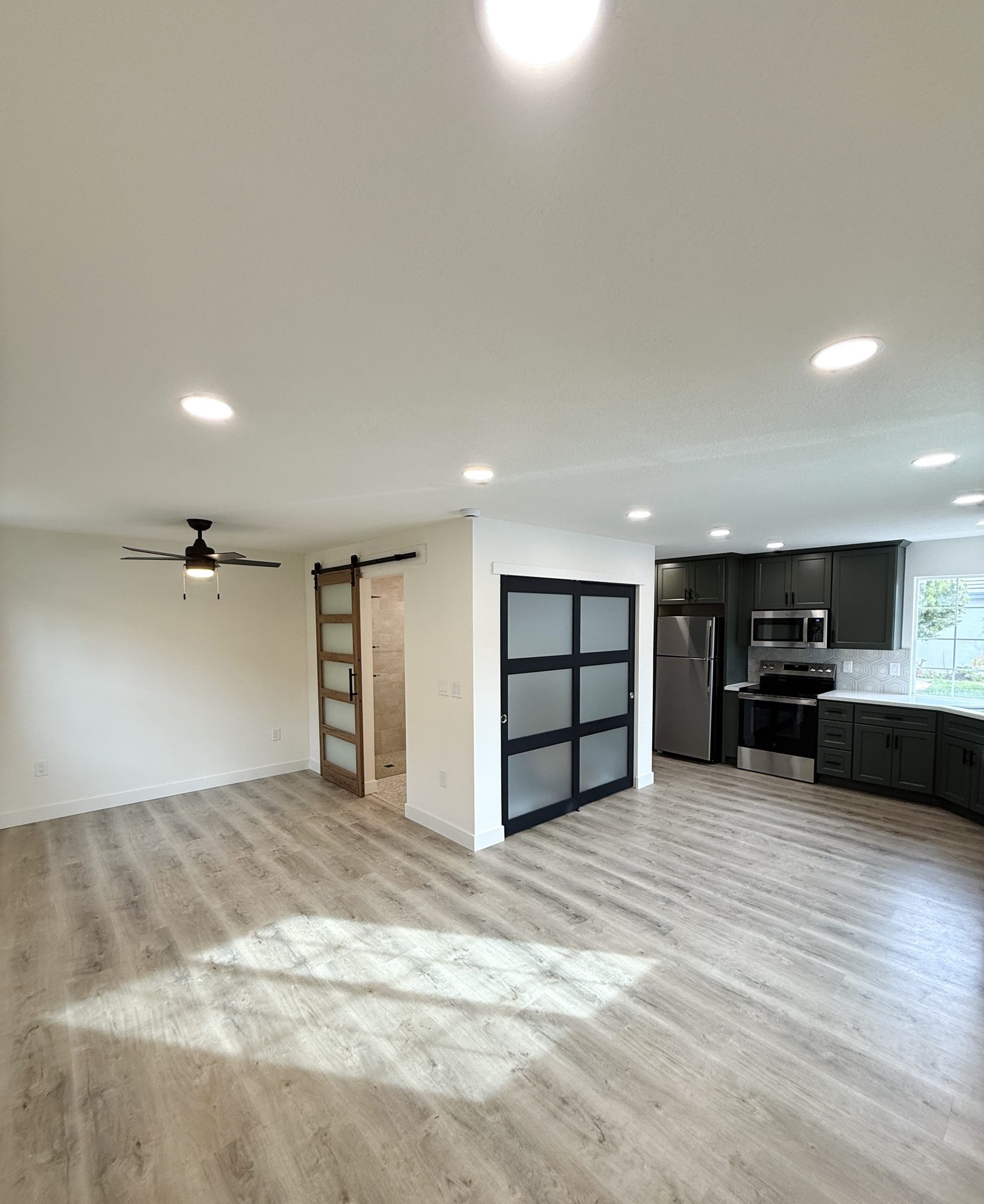
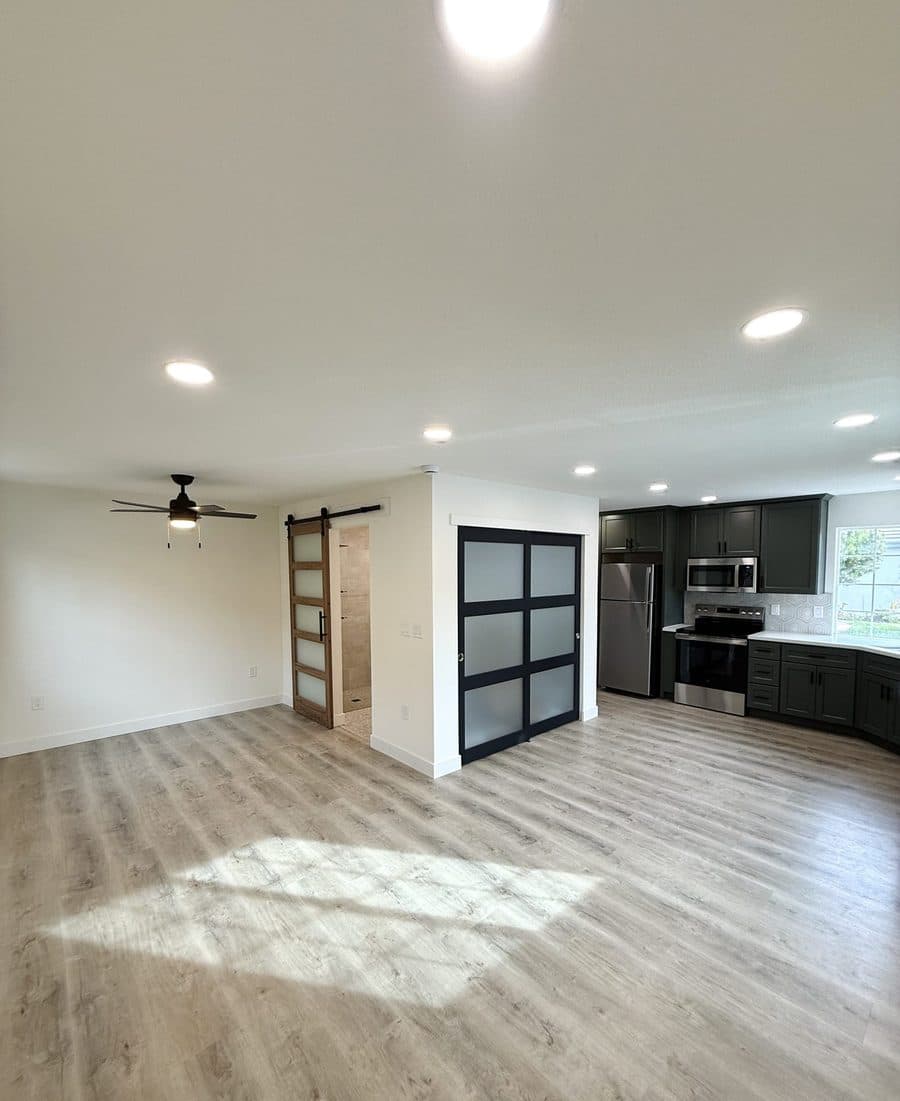
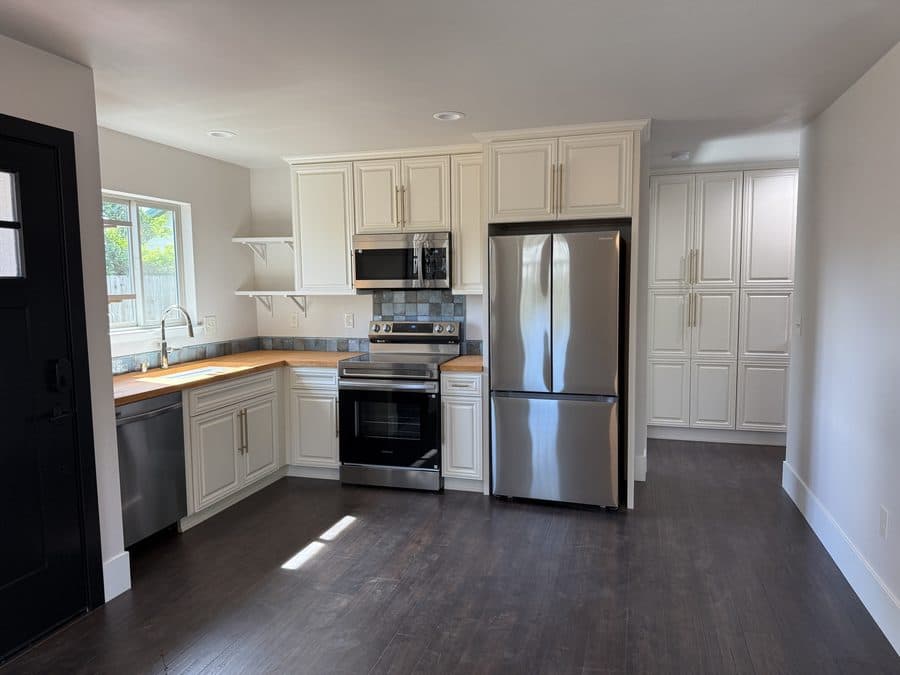
Private entrance, full kitchen, full bath, real bedroom
Ties into the existing roof, foundation and wall line
The wall between two homes
The shared-wall fire and sound assembly
Your shared wall stops being an ordinary interior wall the second two separate dwellings sit on either side of it. Code wants a rated separation. Usually that means a one-hour fire assembly running floor to roof — the right gypsum layers, fireblocking at every penetration, and a sound-rated cavity so your tenant in Rincon Valley isn't living inside your television. This is the part that surprises owners. Pull the finish off a 1960s ranch and you'll sometimes find sheathing and wiring that won't carry the rating as-is. So the existing wall often needs work too, not just the new side. I'll be straight: that's labor people don't budget for. I draw the assembly on the plans and build it to the listed spec, so it passes inspection the first time.
One-hour rated separation between the two dwellings
Sound-rated cavity so neither household hears the other
Existing wall often upgraded too, not just the new side
Where the savings come from
Why attached costs less than detached
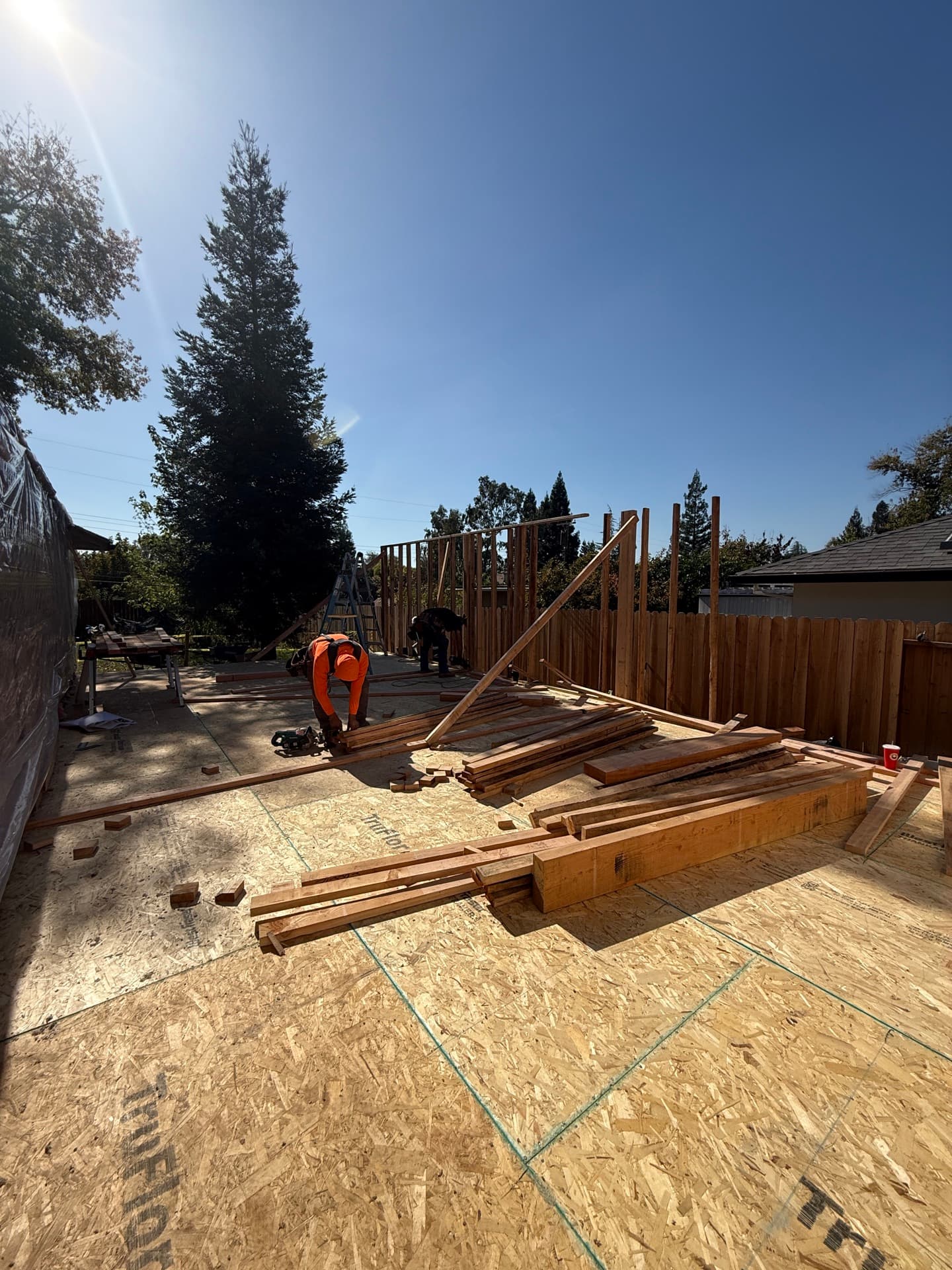
The honest part is that attached units save money for two boring reasons. You borrow a wall, and your utility runs get short. A detached cottage needs four new walls and a trench out across the yard — water, sewer, gas and a PG&E feed, sometimes forty or sixty feet of it through Santa Rosa Plain clay. Attached, you tap in close to the existing house. The panel may already have room. The sewer lateral is right there. That's real dollars off the bottom line. The trade-off is freedom: the unit has to land where the shared wall lands, and the house footprint boxes you in. You don't get to drop it wherever the morning sun is best. For a lot of Santa Rosa lots, the math still favors attached.
One borrowed wall instead of four new ones
Short utility runs — no long trench across the yard
Trade-off: the unit lands where the wall lands
Made to match
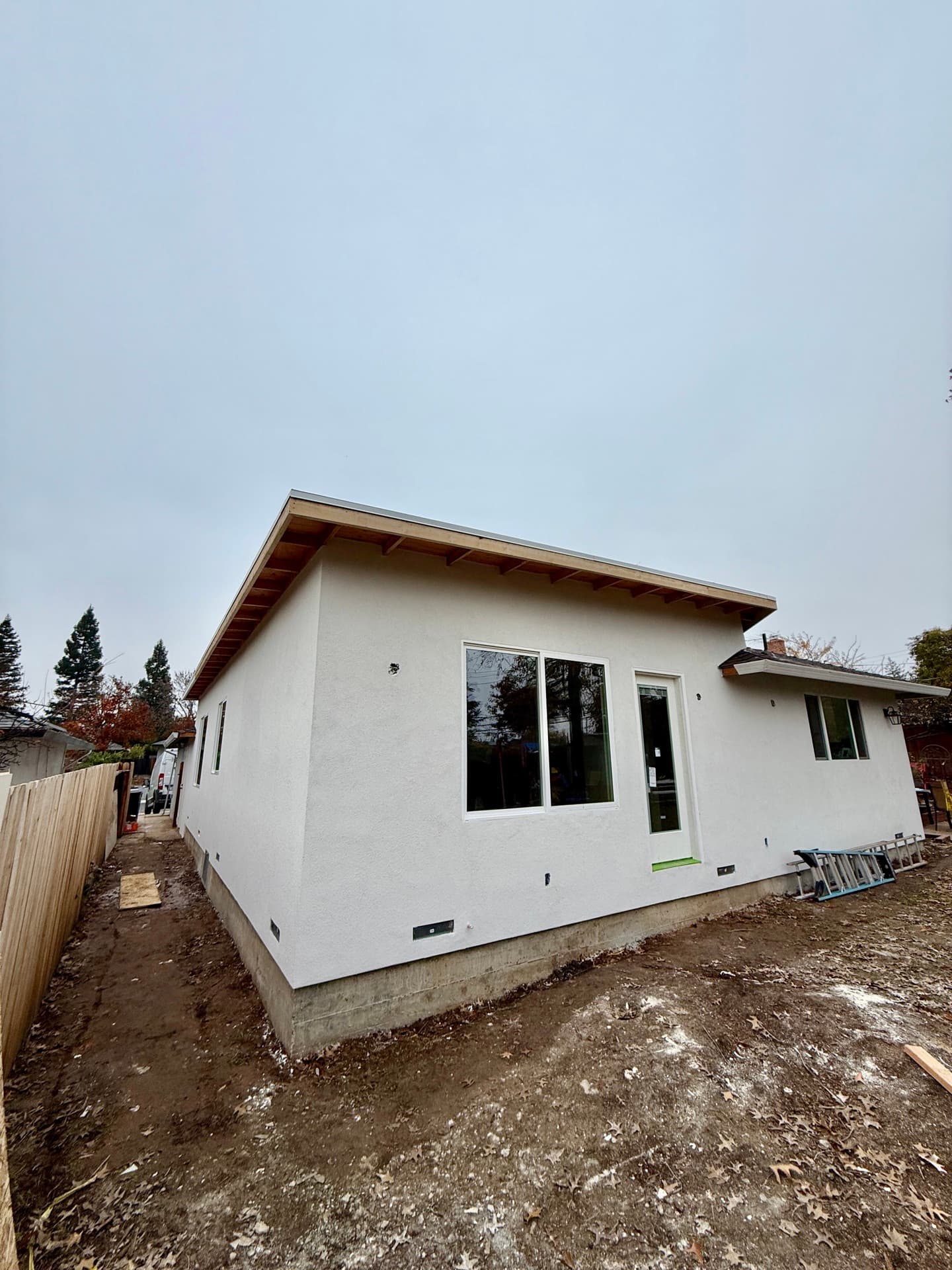
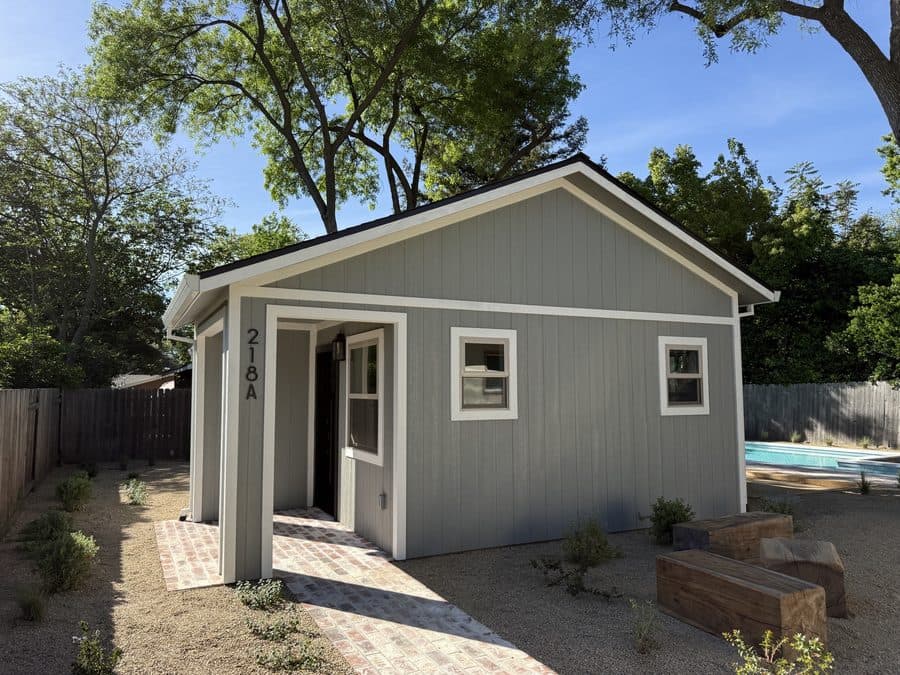
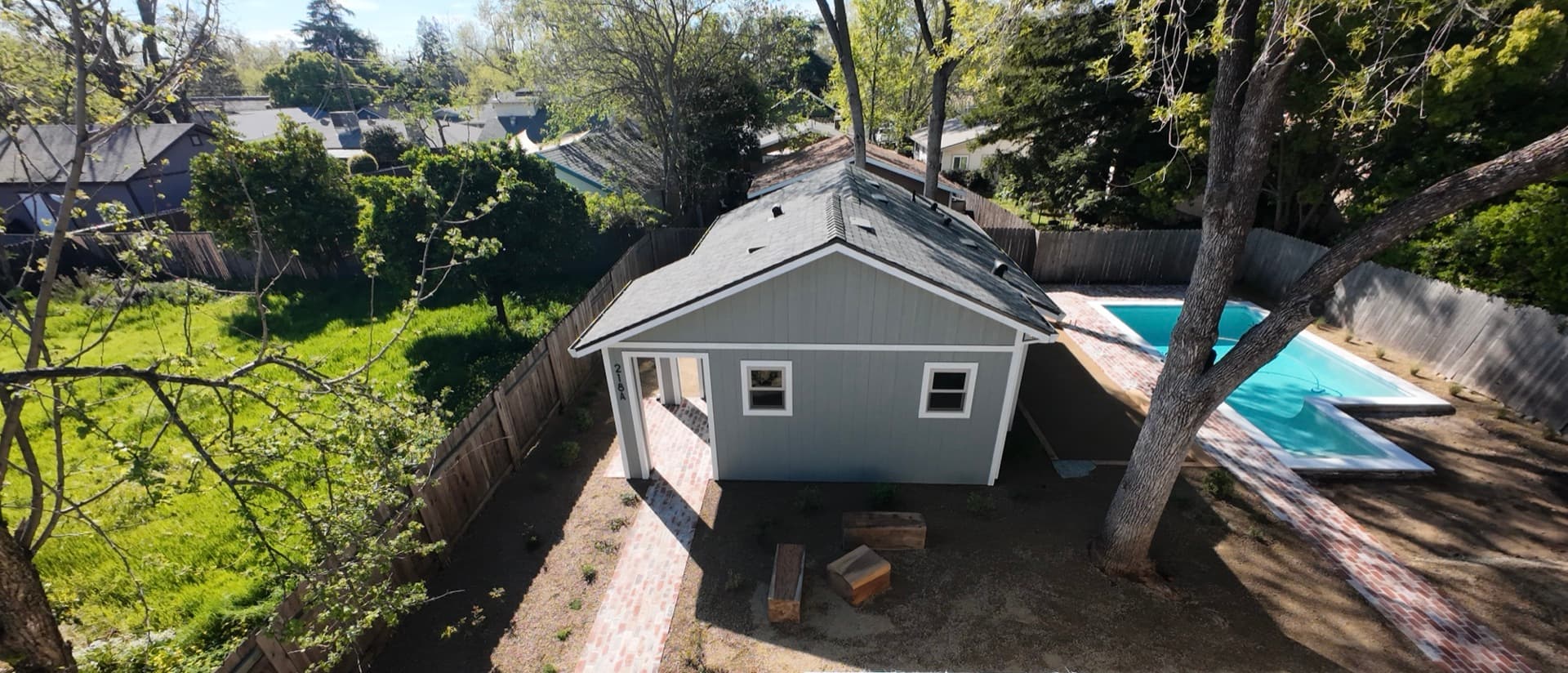
Matching rooflines and siding so it reads as one house
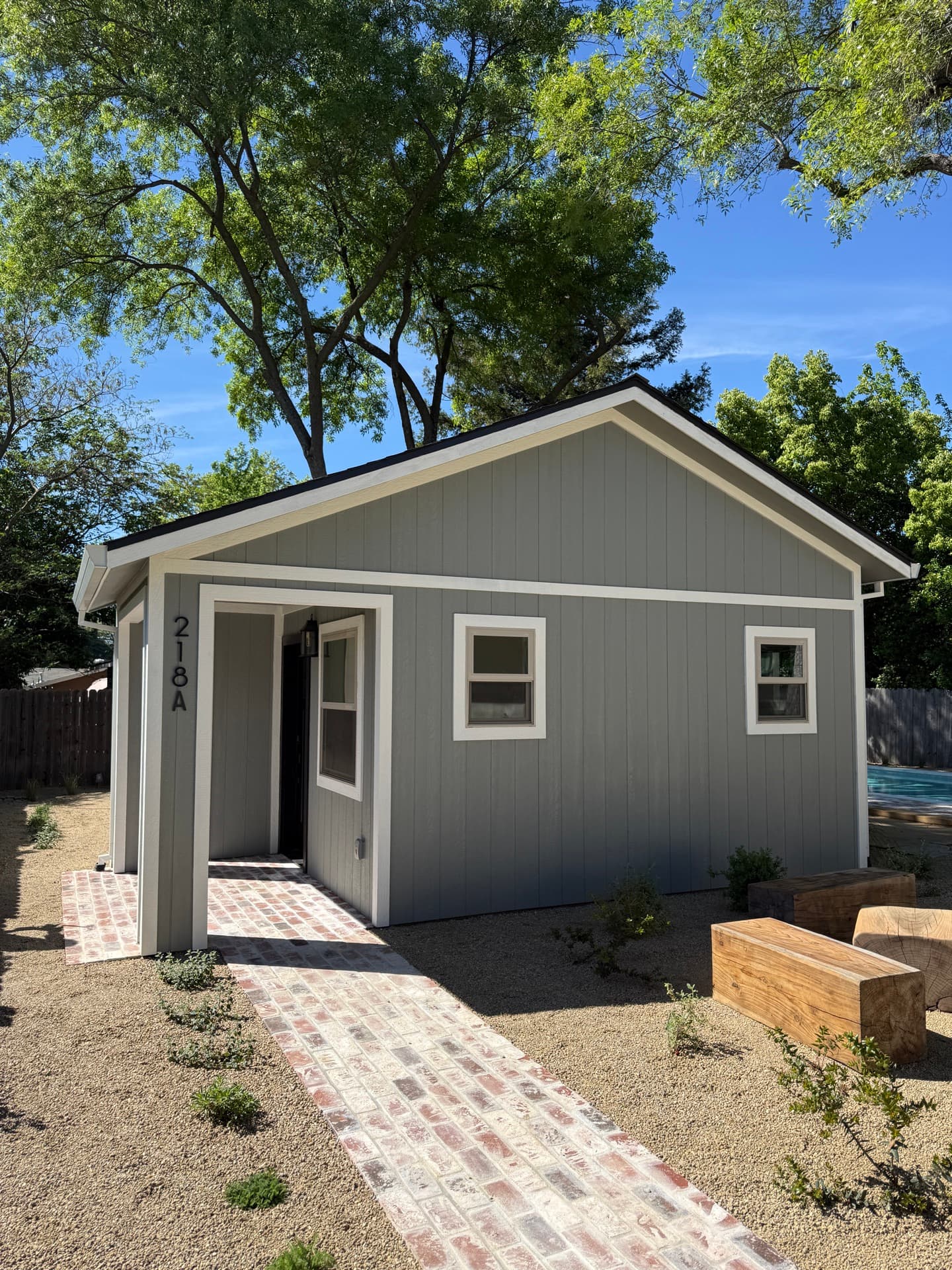
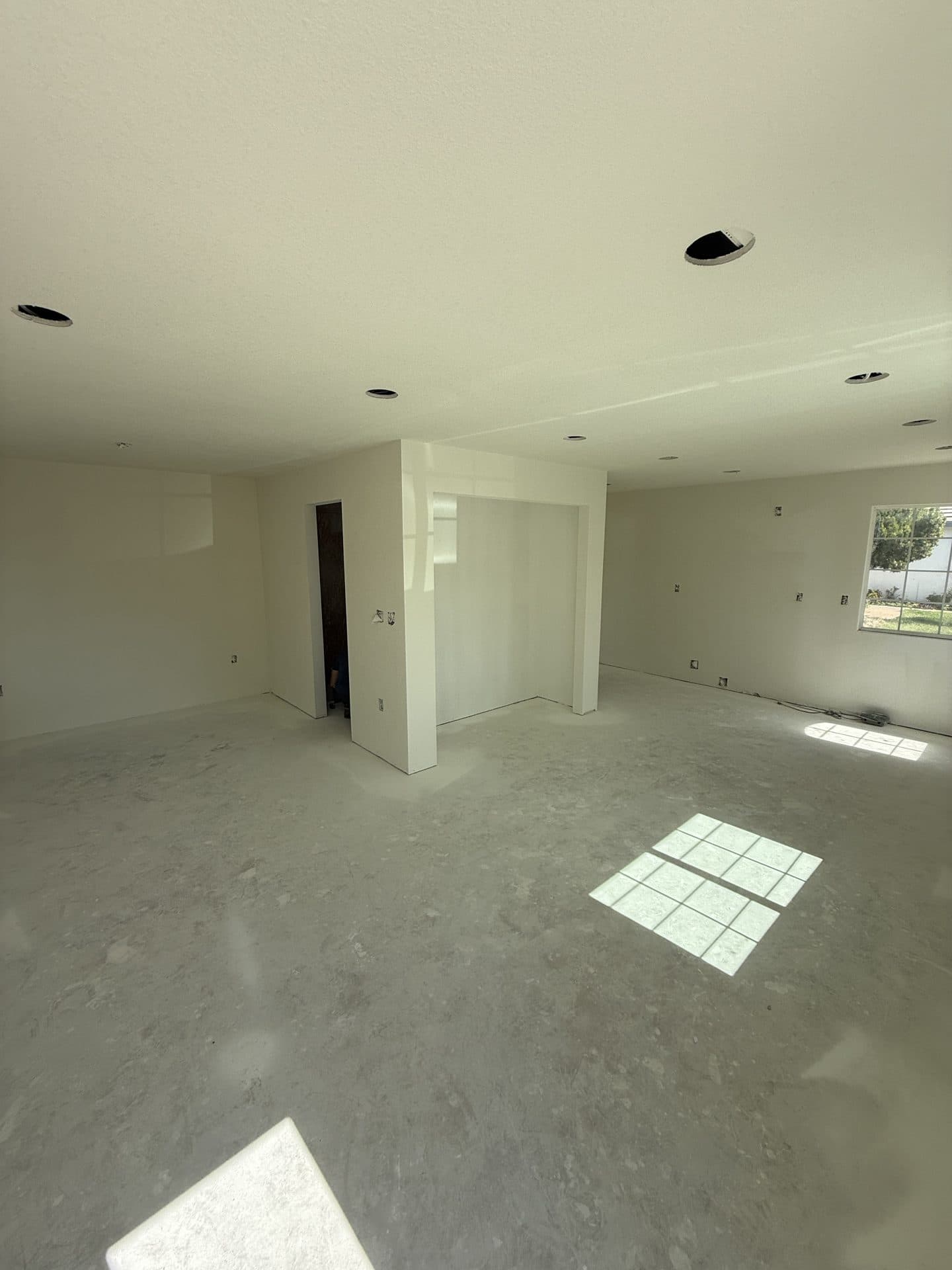
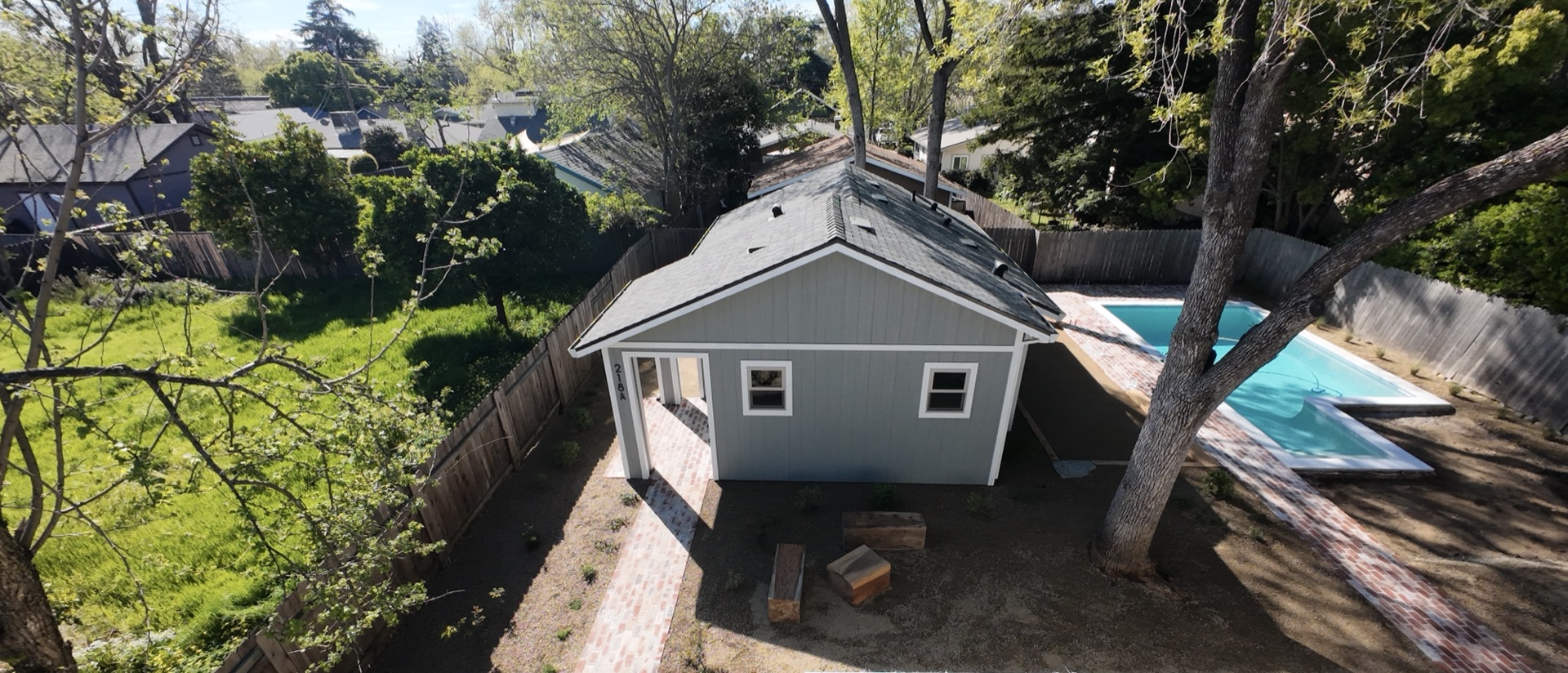
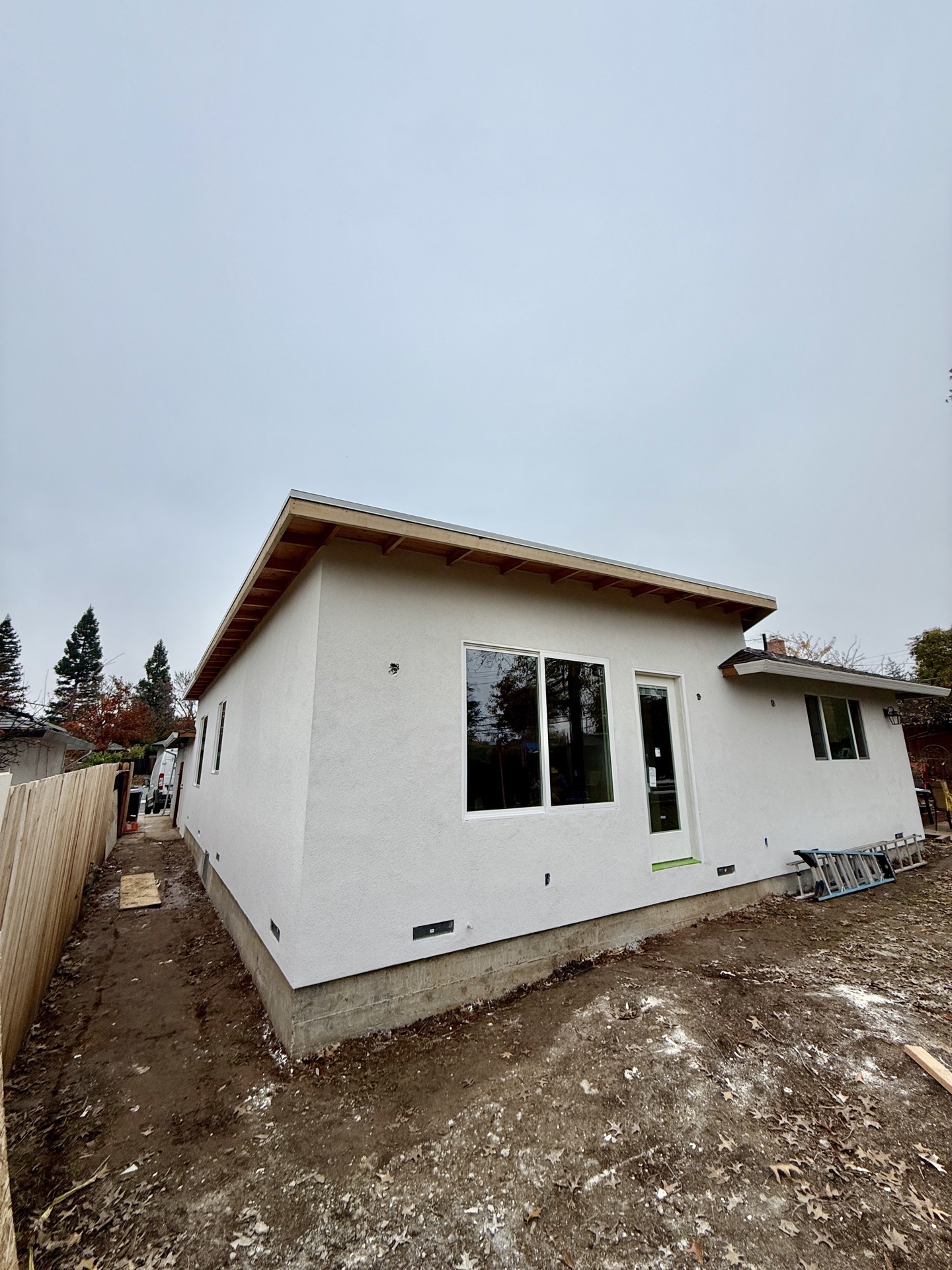
A bad attached ADU looks like a box someone bolted onto the back of a house. A good one looks like the house always had it. That's roofline and siding, mostly. I carry your existing ridge or eave line across so the new roof reads as a continuation, not an afterthought. I match siding profile, exposure and trim, and when I can't buy the old material I'll feather a transition where the eye won't catch it. In the Fountaingrove and Coffey Park rebuild zones this matters double, because the new fire-hardened materials — fiber cement, metal, noncombustible trim — have to look intentional next to whatever survived. Get the lines right and a tenant's front door disappears into the architecture. Get them wrong and the whole property looks chopped.
Existing ridge and eave lines carried across
Siding profile, exposure and trim matched
Fire-hardened materials chosen to look intentional
Build Smart. Invest Wise.
Build Your ADU. Your Investment, Your Future.
From design to move-in, we handle everything. Transparent pricing, on-time delivery, and uncompromising quality.
Custom Designs
Tailored to you
Built to Last
Premium materials
Fast Turnaround
On-time delivery
Full-Service
From start to finish
30+
Years of Experience
120+
ADU Projects Completed
100+
Happy Homeowners
Built for Value. Designed for Life.
Trusted by homeowners across Sacramento & surrounding areas.
ADU Estimator
Know Your Numbers Before You Commit
Get an instant estimate of construction cost, rental income, ROI, and timeline. No email required to see your number.
“Every ADU we build is designed to add long-term value and open new possibilities for your property. Let's build something great together.”
— Tim, ADU Specialist
Custom Designs
Built to fit your property & needs
Turnkey Process
We handle permits, plans & everything
Built to Last
Quality craftsmanship that stands the test
Financing Made Simple
$0 Down Options. Build Now, Pay Over Time.
You shouldn't have to drain your savings to build wealth. We partner with trusted ADU lenders to find financing that fits — many homeowners build with little to nothing out of pocket.
Home Equity (HELOC)
Tap your existing equity at competitive rates — the most popular way to fund an ADU.
Renovation Loans
Finance the build against your home's projected after-completion value.
ADU-Specific Financing
Specialized lenders who underwrite based on the rental income your ADU will produce.
Cash-Out Refinance
Roll the project into a new mortgage and keep one simple monthly payment.
Estimate Your Monthly Payment
See what financing your ADU could look like — and how rental income can help cover it.
$180,000Loan amount
Credit Score
Very good · 700–739
Estimated Monthly Payment
$1,320/mo
At 7.99% APR over 30 years (illustrative)
Often offset by $2,000–$3,500/mo in rental income
No prepayment penalties with most partners
Pre-qualification with no impact to your credit
Illustrative only — not a loan offer. Actual rates and terms are set by third-party lenders based on your qualifications.
Service areas
Where we build
Headquartered in the Greater Sacramento Area and serving homeowners from the Sierra foothills down through the Bay Area. Don't see your city? We probably still get there — just ask.
The most common things Sacramento homeowners ask before starting an ADU project.
Fair question, and I'll give you the honest answer. Santa Rosa is about 90 miles from my shop, roughly an hour and a half to two hours each way down I-80 and over through Highway 12 and 37, traffic depending. That's a real drive and I'm not going to pretend it isn't. So I don't chase small jobs out there. Where it makes sense is a full attached ADU — the kind of project where the craftsmanship and my pricing on a bigger scope more than cover the windshield time. I batch my trips, I stack inspections, and I keep a tight subcontractor bench so I'm not running back and forth for nothing. If you've got a quick repair or a tiny conversion, a Sonoma County builder next door will probably serve you better and cheaper. For a ground-up attached unit, the drive pays for itself.
Inside city limits, your attached ADU goes through the City of Santa Rosa building division, and that's actually good news. After the 2017 fires the City built deep experience fast-tracking ADUs, especially on rebuild lots, and they've kept that muscle. State ADU law gives them a 60-day clock to approve or kick back a complete application, and an attached unit on an existing house is one of the cleaner submittals. I file the plan set, the structural calcs and the energy docs, and I run the corrections cycle with the plan checker directly so you're not playing telephone. If your property sits outside the city line in unincorporated Sonoma County, it's Permit Sonoma instead, which is a different counter with its own rhythm. I'll confirm which jurisdiction you're in before I draw a thing.
Depends a lot on where in town you are. Down on the flats — most of central Santa Rosa, Roseland, the Santa Rosa Plain — you're sitting on valley alluvial clay, and a good chunk of it is expansive. Expansive clay swells when it's wet in winter and shrinks when it bakes in our hot dry summers, and that seasonal heave will crack a lazy foundation. I want a soils report so I'm sizing footings to the real numbers, not guessing. Up in Fountaingrove and the eastern hills it flips to hillside grading, cut-and-fill, sometimes drilled piers depending on slope and what the geotechnical engineer finds. An attached unit makes this easier because it ties into your existing foundation, so I match the new footing to how the old one is behaving instead of starting blind.
Power is PG&E. Water is City of Santa Rosa Water. For an attached ADU the PG&E side is usually painless because you're tapping in near the existing service — I'll check whether your panel has the spare capacity or needs an upgrade before we're deep into framing, since a panel swap has its own lead time with them. The thing that's just part of life up there now is PSPS, PG&E's public safety power shutoffs during high fire-wind days. That doesn't change how I build, but it shapes what I recommend. A lot of Santa Rosa owners want the new unit pre-wired for a generator inlet or a battery, because a fire-season blackout that lasts two or three days is a real possibility. Cheap to rough in now, expensive to retrofit later.
It tends to work here, and I'll tell you why without quoting you a rent number. Santa Rosa is the largest city in the North Bay, it's the job and services hub for Sonoma County, and Wine Country housing is chronically tight — the fires erased a lot of stock and the region never fully caught back up. That's steady demand for a clean, private second unit. An attached ADU also adds real appraised square footage to the main house, so you're not just collecting rent, you're moving the value of the whole property. The catch is honest: Wine Country build costs aren't cheap, and you have to run your own numbers on what you'd carry. But on the demand side, this is a stronger rental market than most of the towns I build in.
I'll give you a range instead of a fairy tale. For a straightforward attached ADU in the Santa Rosa area, plan on roughly the high-$200Ks to the mid-$400Ks all-in for the common one-bedroom-ish sizes, with bigger or more finished units climbing past that. Wine Country labor and materials run higher than the Sacramento Valley, and the drive is baked in. What moves your number most: whether your existing panel and sewer lateral can take the new load without upgrades, how much the shared-wall fire assembly needs reworked on the old side, your soil and foundation, and — this is the big one in Santa Rosa — whether your lot triggers Chapter 7A fire-hardening. Fire-rated assemblies, ember-resistant vents and tempered glass add real cost. I price the whole thing line by line so you see exactly where the money goes.
If your property sits in the wildland-urban interface or a designated fire hazard severity zone — and a lot of Santa Rosa does, especially up around Fountaingrove and the eastern and northern edges — your attached ADU has to meet California Building Code Chapter 7A. After the 2017 Tubbs Fire and the 2019 Kincade Fire, this isn't theoretical here; it's how Santa Rosa rebuilds. In plain terms that means a Class A roof, ember-resistant vents so embers can't crawl into the attic, fire-rated or noncombustible siding, tempered or rated glazing, and defensible-space clearance around the structure. The attached part has a wrinkle: the new unit's fire-hardening has to play nice with the existing house, so we sometimes harden a section of the old wall too. I build to 7A as a matter of course on any zoned lot, because in this county it's not optional and the inspectors know it cold.
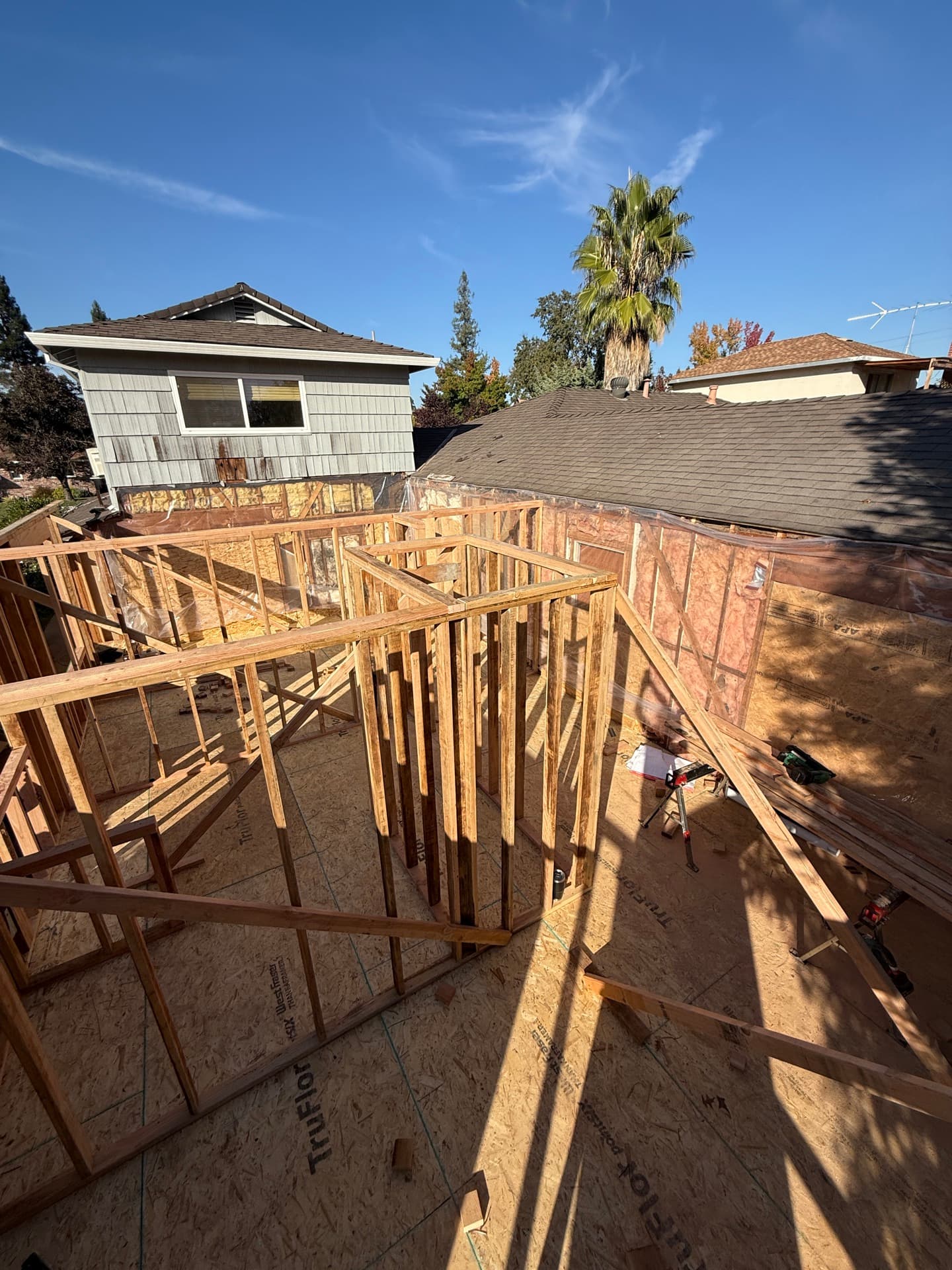
Seriously, because the Rodgers Creek fault runs right through Santa Rosa and it's rated one of the highest-hazard faults in the whole Bay Area. An attached ADU is structurally part of your house once it's tied in, so I don't treat the connection as an afterthought. That means proper shear walls, hold-downs anchoring the framing to the foundation, and a continuous load path so the new unit and the old house move together in a shake instead of tearing at the seam. The tie-in detail — where new framing meets your existing wall and roof — is exactly where a lazy build fails in a quake, so my engineer draws it and the inspector checks it. Older Santa Rosa homes sometimes need a little foundation bolting or cripple-wall bracing on the existing side while we're in there. It's good insurance and it's not expensive to do while the wall's already open.
It can be, depending on where you sit. Santa Rosa Creek and its tributaries thread through town, and parts of the flats fall inside FEMA flood zones with their own elevation rules, plus the City and County enforce creek and waterway setbacks you can't build inside. For an attached ADU this matters because your footprint is already partly fixed by the house, so if the buildable area runs up against a creek setback, we have to be smart about which wall we extend off. I pull the flood map and the setback lines early, before design gets emotional, so we're not drawing a unit that can't legally exist. If you're in a flood zone, there may be a minimum finished-floor elevation, which changes the foundation approach. Better to know that on day one than at plan check.
For a Santa Rosa attached ADU, I'd plan on roughly eight to twelve months from first sketch to final inspection, and the front half of that is paperwork, not hammers. Design and engineering eat a few months — soils report, structural calcs, the fire and seismic detailing, then the City's plan-check cycle. State law caps the City at 60 days per complete submittal, but corrections add loops. Once we've got a permit in hand, the actual build on an attached unit usually runs four to six months, faster than detached because you're borrowing a wall and the utilities are close. Weather plays in: I'd rather not be pouring foundations during a wet Sonoma County winter on clay soil. Fire season can also bump a PSPS day or two. I keep you on a real schedule and tell you straight when something slips, not after.
Other services
Not quite the right fit?
Every Sacramento ADU project is different. Here are the other paths we build under one roof — and we're happy to talk through which one fits your lot best.
We treat every home like it's our own — quality work, clear communication, and happy homeowners.
PaulOwner · Future Generation
10 min read2,090 words8 sections
Building an Attached ADU in Santa Rosa — A Straight-Talk Guide
I build attached ADUs out in Santa Rosa even though my shop is in Sacramento, and I'm not going to dress that up. It's a real drive, so this guide is written for owners with a real project — a full second unit sharing one wall with the house. I'll walk you through how attached works here, what the Rodgers Creek fault and the post-fire rebuild rules mean for your build, and where it's honest to tell you a local builder might be the better call.
01Section
What attached ADU means on a Santa Rosa lot
An attached ADU is a complete, independent home that shares one wall with your existing house. One wall — that's the entire definition, and the entire economic argument. Everything past that shared wall is its own world: a private entrance, a kitchen, a full bathroom, a bedroom. A tenant or a parent lives there without ever crossing your space. On the kind of mid-sized Santa Rosa lots you find in Rincon Valley or Bennett Valley, attached often makes more sense than dropping a freestanding cottage out back.
The reason owners pick attached over detached usually comes down to land and money. You're not building four new walls, you're building three and leaning on one you already own. Your water, sewer and power runs stay short because you tap in near the existing house. On a Santa Rosa Plain lot where the backyard is already small or sloped, that efficiency adds up fast. The trade is that the unit has to grow where the wall is, not where you'd ideally want it.