CA License #1119373Licensed, Bonded & InsuredPowered by Future Generation ConstructionFuture Generation
Modesto · Detached ADU
A freestanding backyard home, built ground-up on Central Valley soil.
Its own foundation, its own roof, four walls of its own. The most flexible ADU you can build in Modesto — and the most honest about what a real second home on your lot takes.
Trusted by homeowners across Sacramento & surrounding areas.
Detached ADU in Modesto — fast facts
City
Modesto
ADU type
Detached ADU
Contractor license
CSLB #1119373
Free estimate
(916) 677-9774
Last updated
What it actually is
A real second home in your backyard
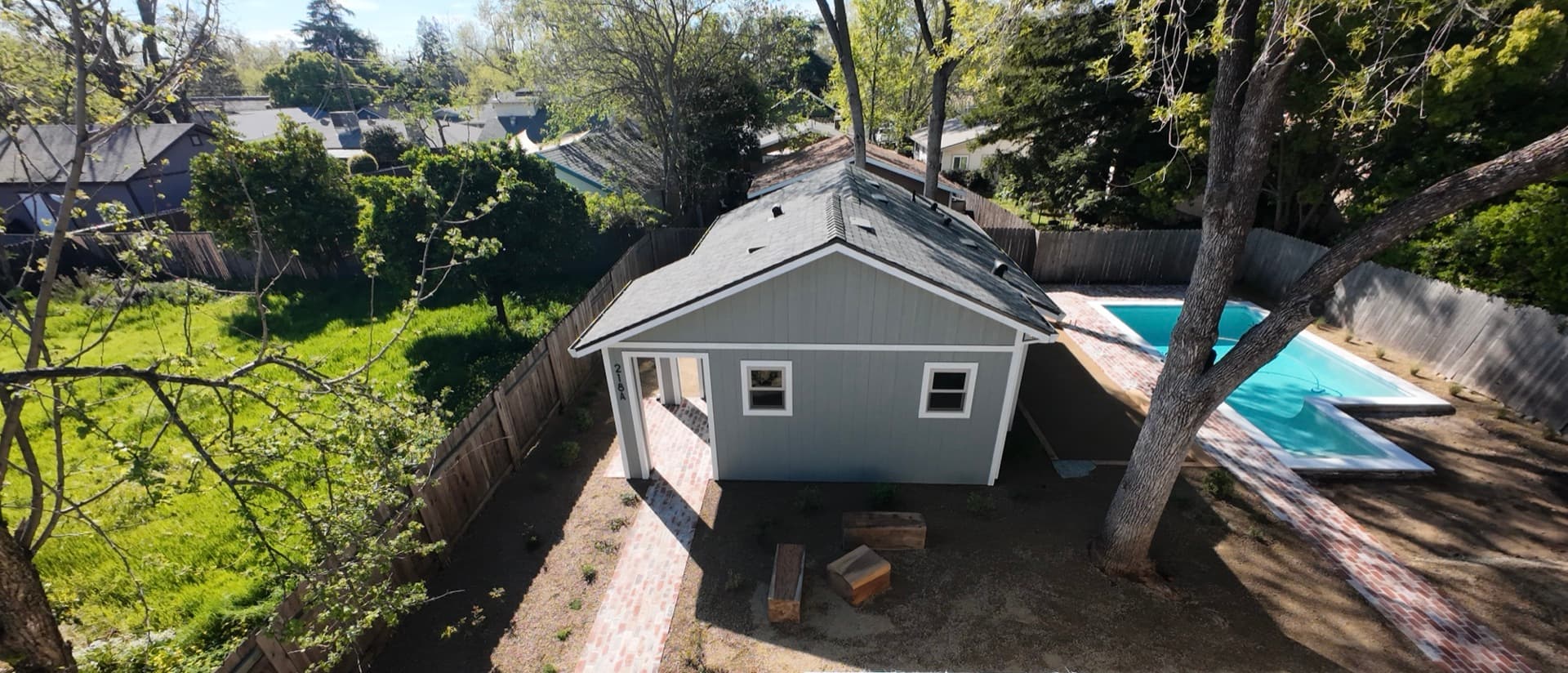
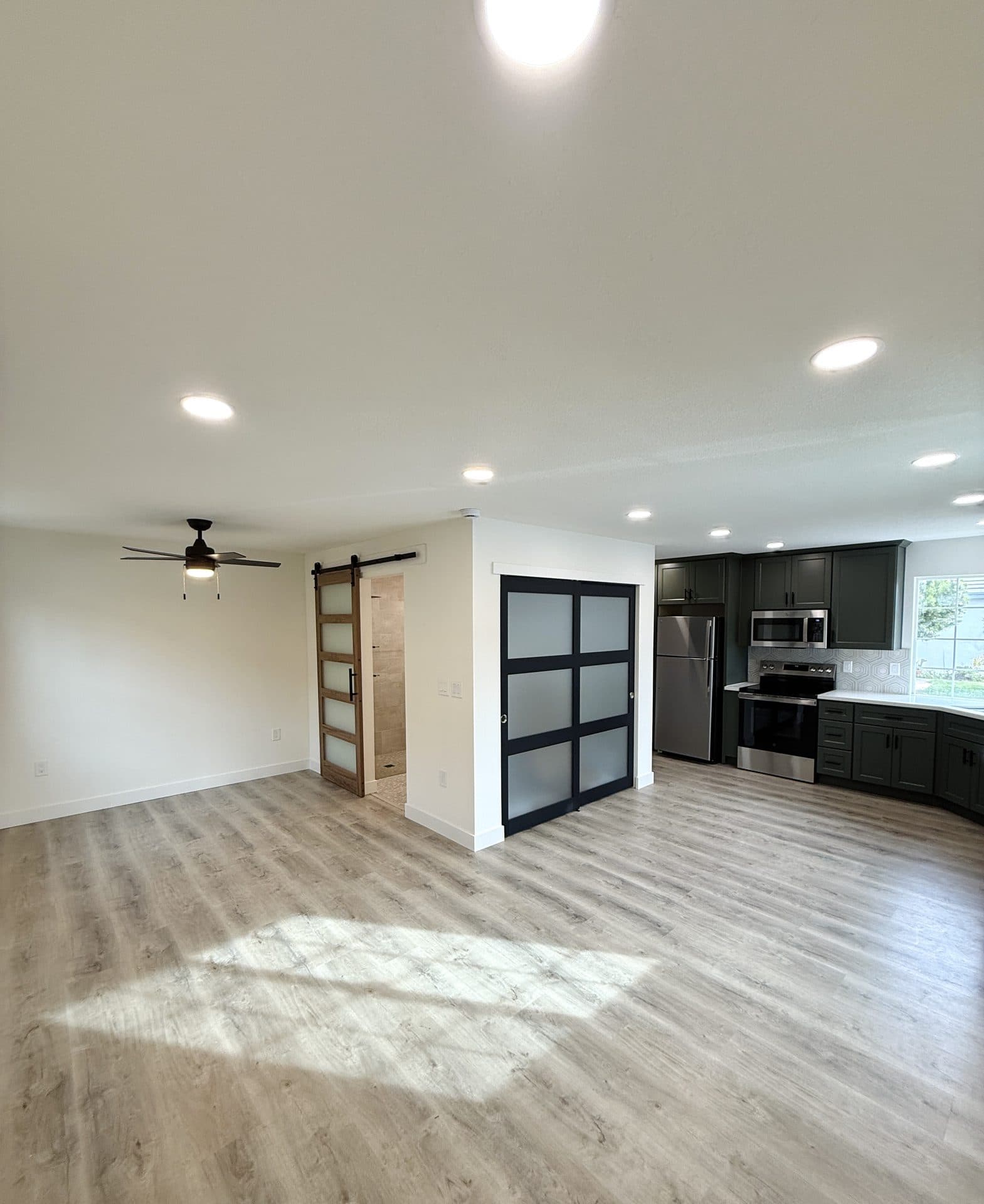
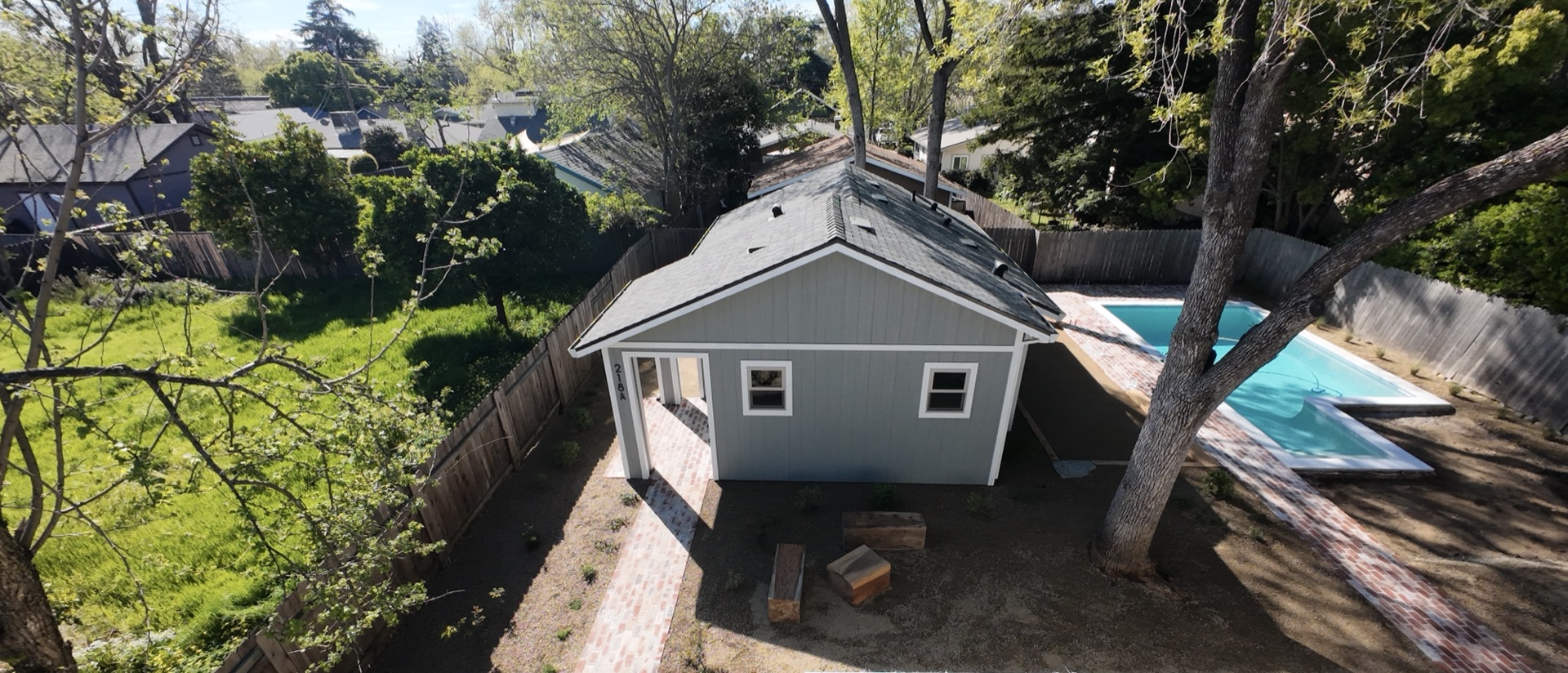
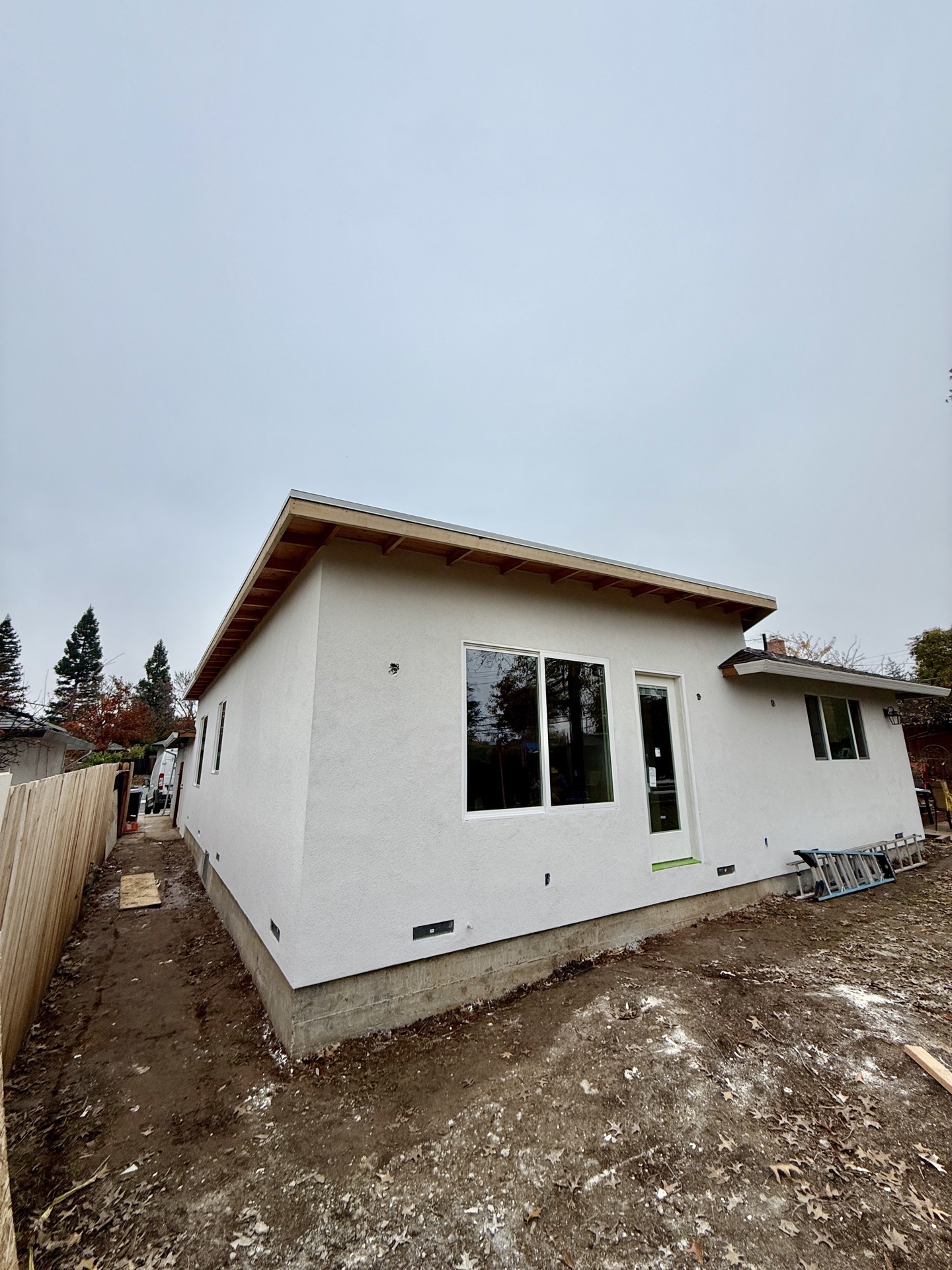
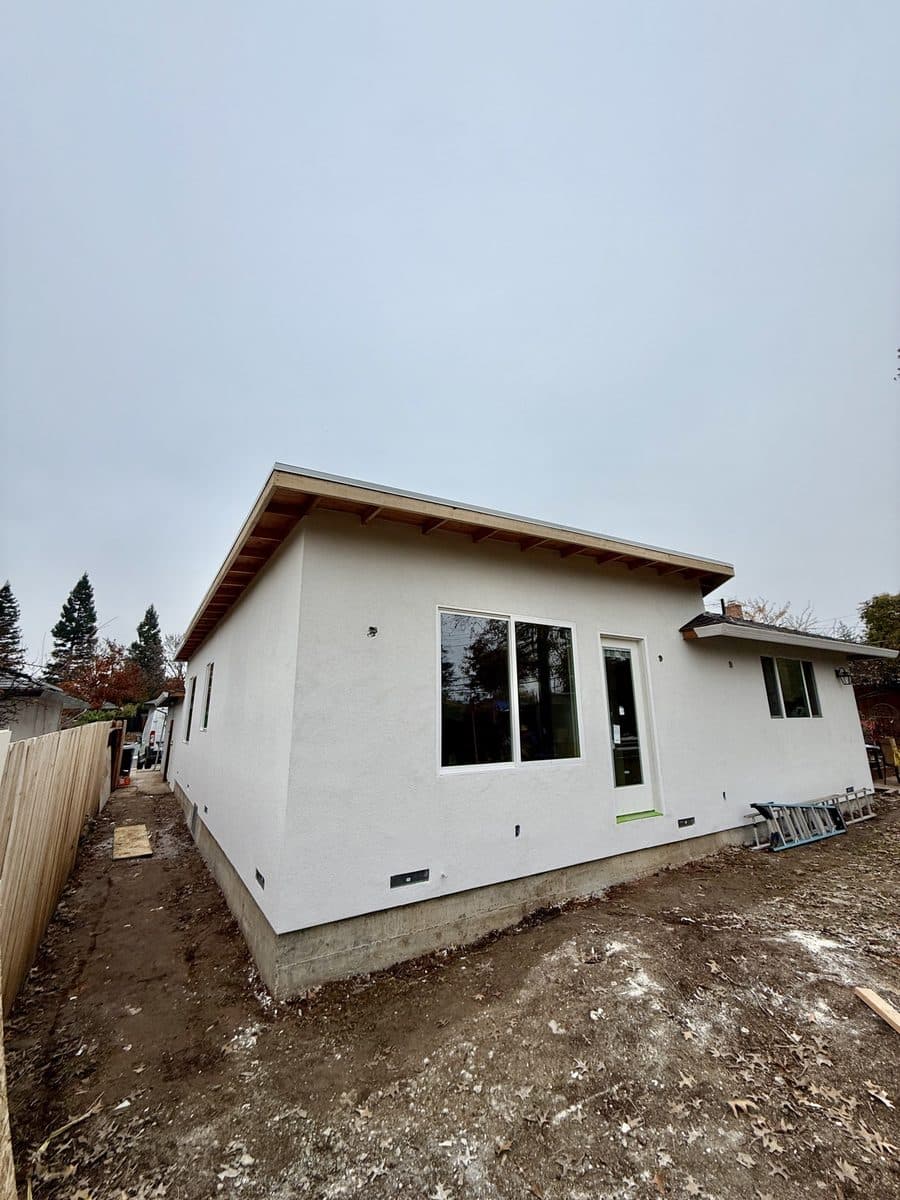
Let me be plain about what a detached ADU is. It's a separate little building. Its own foundation poured into your Modesto soil, its own roof framed over its own four walls, sitting apart from your main house. No shared wall. That's the whole point. Out in La Loma or the College Area near CSU Stanislaus, I see backyards with the room for it — deep lots, mature trees, space to set a unit where it gets morning light and keeps the main house's privacy. Because it stands alone, I can orient it however the lot wants. That freedom is the upside. The downside is honest too: you're building a complete structure from dirt up, so it costs more than carving space out of what you already own.
Own foundation, own roof, own four walls — fully freestanding
Siting freedom: place and orient it however your lot works best
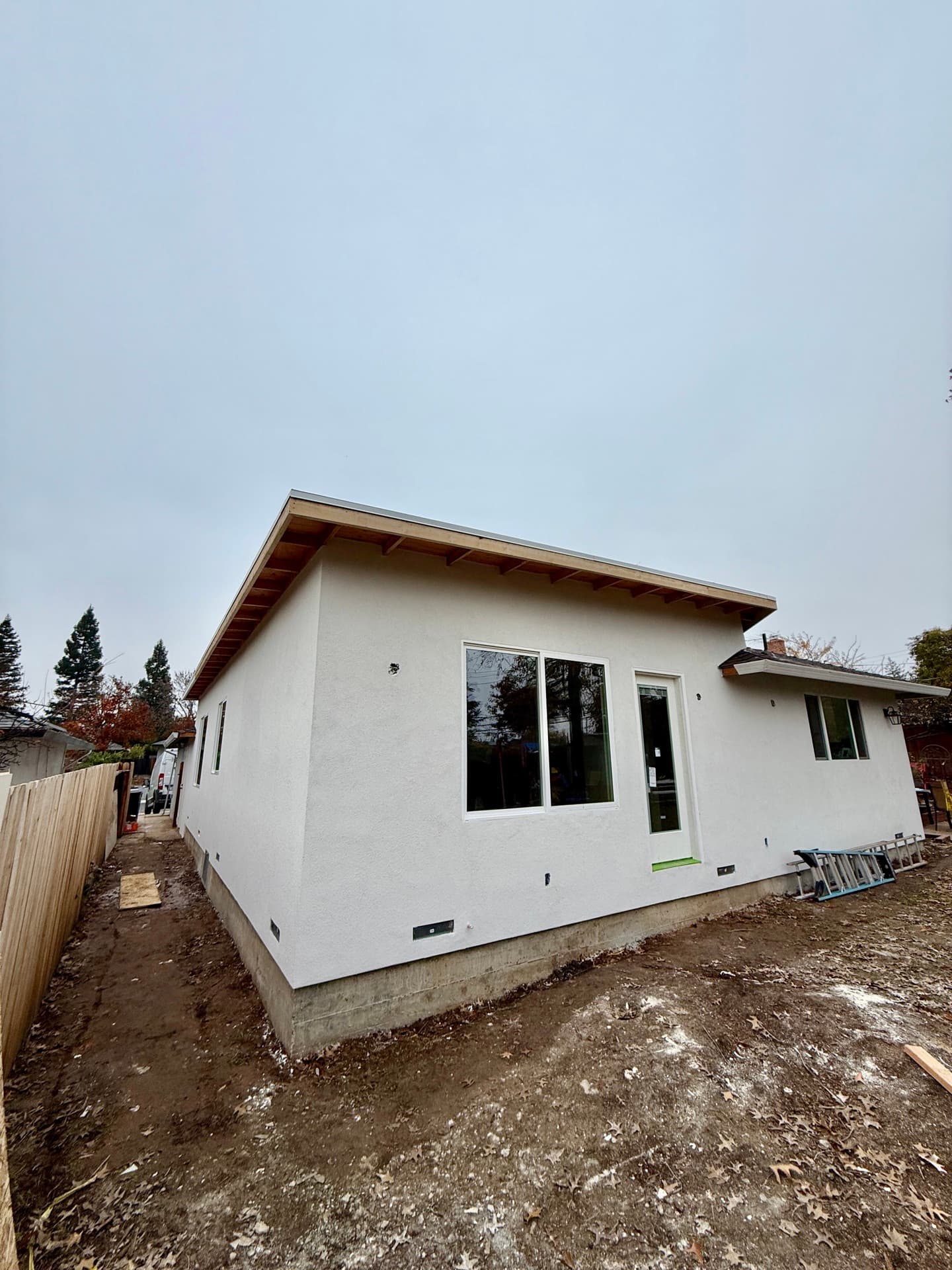
A complete ground-up build, not a conversion of existing space
Why people build them here
Multi-generational room that pays
Modesto families build detached ADUs for two reasons, and they usually overlap. First, family. A lot of households here are multi-generational — grandparents who want their own front door, a grown kid saving up, someone coming back from school at MJC. A detached unit gives them a real home, not a converted garage corner. Second, the math. This is a Central Valley ag town, not the Bay, so rents are lower — but so is the build cost, and the demand for a clean, private rental near downtown or Village I is steady. Dairy workers, Gallo employees, hospital staff. I won't quote you a rent figure; that's your homework with a local property manager. But the math here works more like Sacramento than San Jose, and it pencils out for a lot of owners.
Private quarters for multi-generational Modesto households
Steady rental demand from the ag and downtown workforce
Lower Valley build cost keeps the numbers reasonable
The ground you build on
Flat Valley loam, engineered right
Modesto sits on flat Central Valley ground — alluvial loam and clay laid down over thousands of years by the rivers. For a builder, that's mostly good news. The lots are level, the soil is generally buildable, and I'm not fighting hillsides like I would in the Tri-Valley. But I'll tell you the honest part: there's expansive clay in pockets around town, the kind that swells when the winter tule fog and rain soak in and shrinks again in those 100-degree summers. Clay that moves will crack a foundation that ignored it. So every detached unit I build gets a soils report, and the foundation gets engineered to what that report says — slab thickness, reinforcement, sometimes a deeper footing. I don't guess at dirt. I test it, then I pour to it.
Flat alluvial loam and clay — level, buildable ground
Expansive clay pockets handled with a real soils report
Foundation engineered to the soil, never guessed
Power, water, and the trench
Wired through MID, not PG&E
Here's the local detail most out-of-town builders get flat wrong. Your electricity in Modesto isn't PG&E. It's the Modesto Irrigation District — MID — a municipal utility the city has run for over a century. So when I plan power for your detached ADU, the meter, the service upgrade, the coordination all go through MID, and their process and timelines are their own. Get that wrong and your project stalls. Because the unit stands apart from the main house, it needs its own utility trench — power, water, sewer all dug out and run from where they tap in to where the unit sits. Water and sewer are City of Modesto. I plan that trench early, because the dig route and depth shape where the building can practically go. It's not glamorous. It's where detached projects either flow or jam up.
Electricity through MID — the municipal utility, not PG&E
Separate utility trench: power, water, and sewer run to the unit
Water and sewer coordinated with the City of Modesto
Build Smart. Invest Wise.
Build Your ADU. Your Investment, Your Future.
From design to move-in, we handle everything. Transparent pricing, on-time delivery, and uncompromising quality.
Custom Designs
Tailored to you
Built to Last
Premium materials
Fast Turnaround
On-time delivery
Full-Service
From start to finish
30+
Years of Experience
120+
ADU Projects Completed
100+
Happy Homeowners
Built for Value. Designed for Life.
Trusted by homeowners across Sacramento & surrounding areas.
ADU Estimator
Know Your Numbers Before You Commit
Get an instant estimate of construction cost, rental income, ROI, and timeline. No email required to see your number.
“Every ADU we build is designed to add long-term value and open new possibilities for your property. Let's build something great together.”
— Tim, ADU Specialist
Custom Designs
Built to fit your property & needs
Turnkey Process
We handle permits, plans & everything
Built to Last
Quality craftsmanship that stands the test
Financing Made Simple
$0 Down Options. Build Now, Pay Over Time.
You shouldn't have to drain your savings to build wealth. We partner with trusted ADU lenders to find financing that fits — many homeowners build with little to nothing out of pocket.
Home Equity (HELOC)
Tap your existing equity at competitive rates — the most popular way to fund an ADU.
Renovation Loans
Finance the build against your home's projected after-completion value.
ADU-Specific Financing
Specialized lenders who underwrite based on the rental income your ADU will produce.
Cash-Out Refinance
Roll the project into a new mortgage and keep one simple monthly payment.
Estimate Your Monthly Payment
See what financing your ADU could look like — and how rental income can help cover it.
$180,000Loan amount
Credit Score
Very good · 700–739
Estimated Monthly Payment
$1,320/mo
At 7.99% APR over 30 years (illustrative)
Often offset by $2,000–$3,500/mo in rental income
No prepayment penalties with most partners
Pre-qualification with no impact to your credit
Illustrative only — not a loan offer. Actual rates and terms are set by third-party lenders based on your qualifications.
Service areas
Where we build
Headquartered in the Greater Sacramento Area and serving homeowners from the Sierra foothills down through the Bay Area. Don't see your city? We probably still get there — just ask.
The most common things Sacramento homeowners ask before starting an ADU project.
Fair question, and I'll be straight with you. My shop is in Sacramento, and Modesto's about 75 miles south, a 75 to 80 minute run straight down Highway 99. Here's the thing people miss: that's not a Bay-traffic slog. It's the same Central Valley corridor I drive all the time, flat and familiar, no bridges, no gridlock. Modesto is comfortable home turf for me, not a stretch. I build out there because the work is good, the families are real, and the Valley soil and climate are things I already understand cold. I won't pretend I'm five minutes away — I'm not. But I show up, I plan my trips tight so I'm not bleeding days on the road, and I coordinate with local inspectors and MID directly. If you want a builder who treats Modesto like the next town over instead of a foreign country, that's me.
For a parcel inside Modesto city limits, your detached ADU permit goes through the City of Modesto building department. That's plan check, the permit itself, and the inspections during the build. If your property sits on an unincorporated parcel outside the city line — and there's plenty of that around the edges of town — then it's Stanislaus County's building department instead, which is a different counter with its own rules. I confirm which jurisdiction you're in before I draw anything, because it changes the submittal and the timeline. State ADU law sets a baseline that both have to honor, which helps, but the local department still runs plan check and stamps the approvals. I handle that paperwork and the back-and-forth so you're not the one sitting on hold trying to decode a correction notice.
Modesto is flat Central Valley ground — alluvial loam and clay the rivers dropped here over a very long time. Mostly that's a gift: level lots, buildable dirt, no hillside drama. But parts of town have expansive clay, soil that swells when winter rain and tule fog soak in and shrinks back in summer heat. Clay that moves will crack a foundation that didn't account for it. So I don't guess. Every detached unit gets a geotechnical soils report, and the foundation — slab thickness, rebar, footing depth — gets engineered to exactly what that report finds. On good firm ground that's a straightforward slab. On clay it's a beefier, sometimes deeper foundation. Either way it's designed to the real conditions under your backyard, not a generic template. That's the part you never see once it's poured, and it's the part that matters most.
No, and this trips up builders who don't work Modesto. Your electricity comes from the Modesto Irrigation District, MID, a municipal utility the city has operated since the 1880s. It is not PG&E. That matters for your detached ADU because the new meter, any service upgrade, and the load coordination all run through MID's process — their forms, their timelines, their crews. A builder who assumes PG&E will file with the wrong utility and stall your project cold. I plan the electrical around MID from day one. Your water and sewer, by the way, are City of Modesto utilities. So a detached unit touches MID for power and the city for water and sewer, and I line up both early because that trench has to be dug and inspected before the unit comes alive. Getting the utility right is genuinely one of the things that separates a smooth Modesto build from a stuck one.
For a lot of owners, yes — but I want you going in clear-eyed. Modesto is a Central Valley ag town, not the Bay, so rents are lower than San Jose or Pleasanton. That's the real picture. But here's the balance: build costs are lower too, and rental demand is steady. You've got Gallo, the dairies, the almond operations, CSU Stanislaus and MJC, the hospitals — a real workforce that needs clean, private housing near downtown, the College Area, or Village I. The math here behaves a lot more like Sacramento than the Bay. I won't quote you a rent number; that's a conversation for a local property manager who tracks it monthly. What I'll say is that for multi-generational families, the value isn't just rent — it's keeping family close with their own front door. Run the numbers on your specific lot before you commit. If they don't work, I'll tell you.
I'll give you a real range instead of dodging. A detached ADU in Modesto typically lands somewhere between $280,000 and $500,000, all in. That's a wide spread on purpose, because the variables are big. A compact one-bedroom on firm soil with a short utility trench and standard finishes sits at the low end. A larger two-bedroom on expansive clay needing a heavier foundation, a long trench run, an MID service upgrade, and nicer finishes climbs toward the top. Detached is the most expensive ADU type, full stop — you're building a complete structure from the dirt up, not converting space you already have. That's the trade for the freedom and privacy you get. After I see your lot, your soils report, and your utility situation, I give you a real number, not a teaser. No surprise line items halfway through.
Because you're building everything from scratch. With a garage conversion you already have a slab, walls, and a roof — I'm reworking what's there. With an attached unit you share a wall and a foundation edge with the main house, which saves real money. A detached ADU shares nothing. Its own foundation poured into the ground, its own complete framing, its own roof system, its own separate utility trench run all the way out from the taps. Every component is new and every component is yours alone. That's why it costs the most. But it's also why it's the most flexible — no existing structure dictating the layout, full freedom on where it sits and which way it faces, and a clean separation from your house. You pay more for a true standalone home. For a lot of Modesto lots with the room to spare, that's exactly the right call.
More than with any other ADU type, which is one of the best things about going detached. Since the unit doesn't lean on your existing house, I can place it where the lot actually wants it. On a deep La Loma lot I can set it back for privacy and tuck it under existing shade. I can orient the windows to dodge that brutal west-facing summer sun and catch a morning breeze instead. I can angle the entry away from the main house so both homes feel separate. The limits are the real ones — setback rules from the City of Modesto or the county, the path your utility trench has to take, and where the big trees and their roots sit. Within those, you've got genuine choices. I walk the backyard with you and we figure out the best spot together, balancing privacy, sun, and how hard the trench is to run.
Modesto weather is a real design input, not a footnote. Summers here run brutal — 100-plus degrees, bone dry, week after week. Winters bring the tule fog and damp. So I build for that. Good insulation and a right-sized HVAC matter more here than in a mild coastal town, because that little unit has to stay livable through a Valley July without running up a punishing MID bill. Window placement and shading help — orienting glass away from the worst afternoon sun cuts the heat load before the AC ever kicks on. The damp foggy winters factor into moisture detailing and ventilation. None of this is exotic; it's just Valley-appropriate construction. The point is I'm not dropping a generic box on your lot. I'm building something that handles Modesto's actual climate, because comfort and energy cost over the years come straight from these calls.
Modesto's seismic risk is real but lower-key than the Bay. You're not sitting on top of the Hayward or Calaveras faults like the Tri-Valley is, so the shaking design here is less dramatic than what I'd detail in Pleasanton. That said, this is still California, and California building code takes seismic seriously everywhere. So your detached ADU gets proper structural detailing — the foundation anchoring, the shear walls, the framing connections that tie the building together so it moves as one piece. It's engineered to code for this zone, not over-built for a fault that isn't under you and not under-built either. The foundation work ties straight into this, which is another reason that soils report matters: the structure and the ground it sits on get designed as one system. You get a unit that's safe and sound without paying for Bay Area-level seismic measures you don't need here.
Other services
Not quite the right fit?
Every Sacramento ADU project is different. Here are the other paths we build under one roof — and we're happy to talk through which one fits your lot best.
We treat every home like it's our own — quality work, clear communication, and happy homeowners.
PaulOwner · Future Generation
10 min read2,151 words8 sections
Building a Detached ADU in Modesto — A Straight-Talk Guide for Central Valley Owners
I build detached ADUs, and I work Modesto from my shop up in Sacramento — about 75 miles north, a familiar Highway 99 run, not a Bay-traffic ordeal. This is an honest guide to what a freestanding backyard unit actually takes here: the Central Valley soil, the City of Modesto permit counter, the MID power hookup most builders get wrong, and a real cost range. No fluff, no rent promises. Just what I'd tell you standing in your backyard.
01Section
What a detached ADU really is
A detached ADU is a separate building. Not a wing off your house, not a converted garage — a freestanding little home with its own foundation, its own roof, and its own four walls, sitting apart on your lot. That separation is the whole identity of it. There's no shared wall with the main house, which is exactly why people who want true privacy, for a renter or for family, choose detached over the other options. It reads and lives like its own house, because structurally that's what it is.
The upside of standing alone is freedom. I can put the unit where your lot actually works best — back from the house for privacy, angled away from the afternoon sun, tucked near existing shade. Nothing about your existing house dictates the layout or the orientation. On the deeper lots I see around La Loma and the College Area, that flexibility is worth a lot. You get a genuine second home placed with intention, not squeezed into whatever space happened to be left over.